Managing a toddler and an infant is a full-time job. Between nursing, meal prep, and trying to keep the house from looking like a disaster zone, it can feel overwhelming — and you may not even remember the last time you had a stain-free outfit or a quiet moment to brush your teeth.
I’ve been there more than once. I had my second child when my oldest was 14 months, and before long I had four kids under four while still teaching evening college classes. I know how chaotic days can feel with a baby and a toddler.
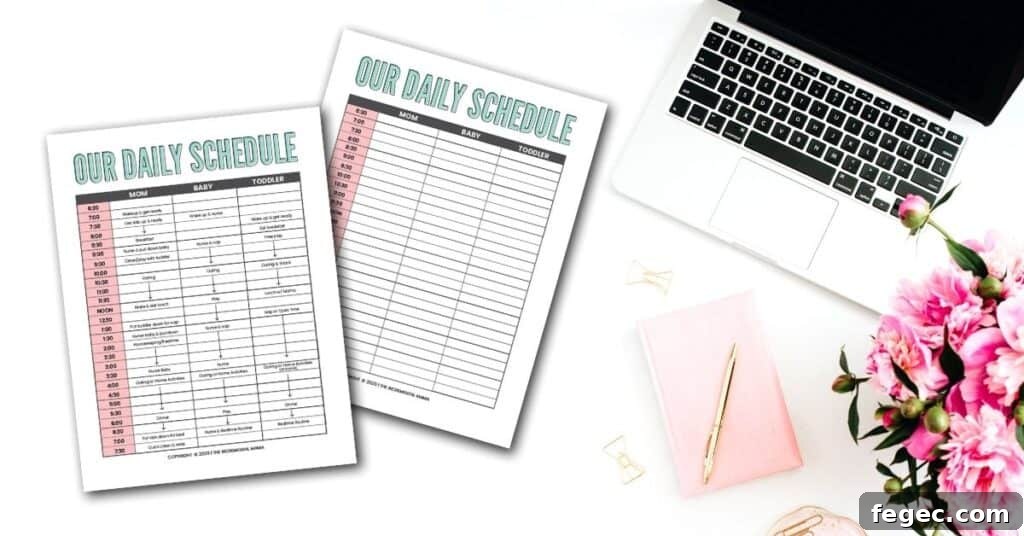
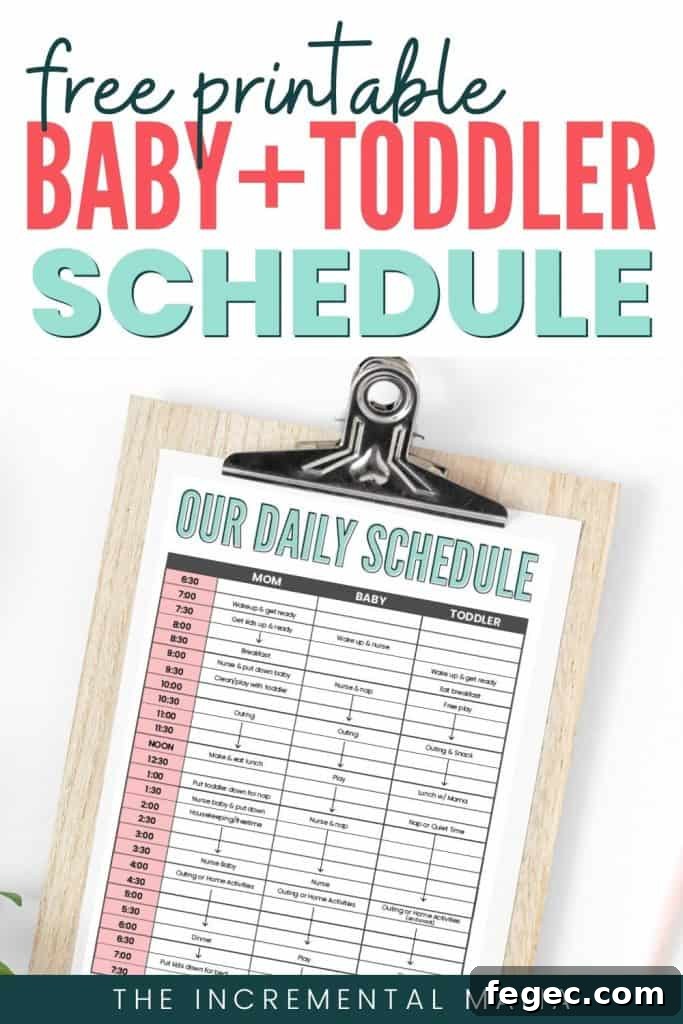
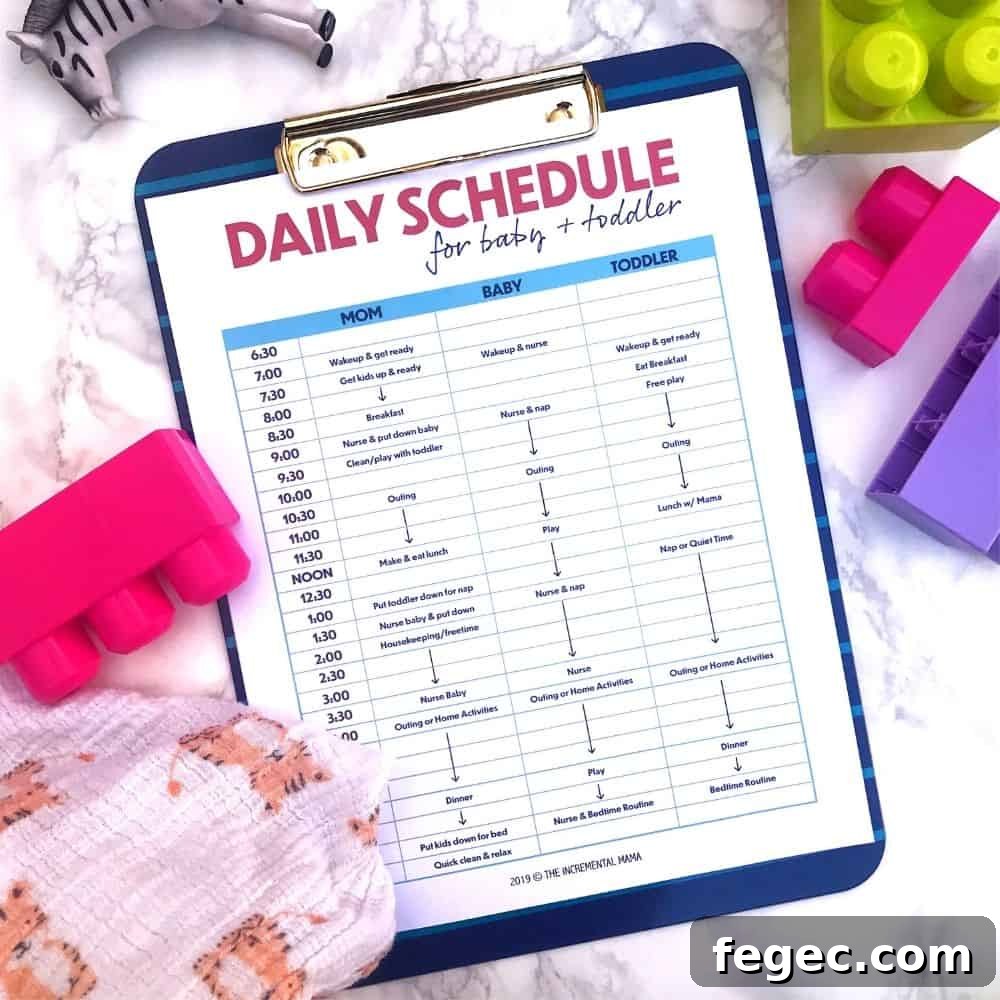
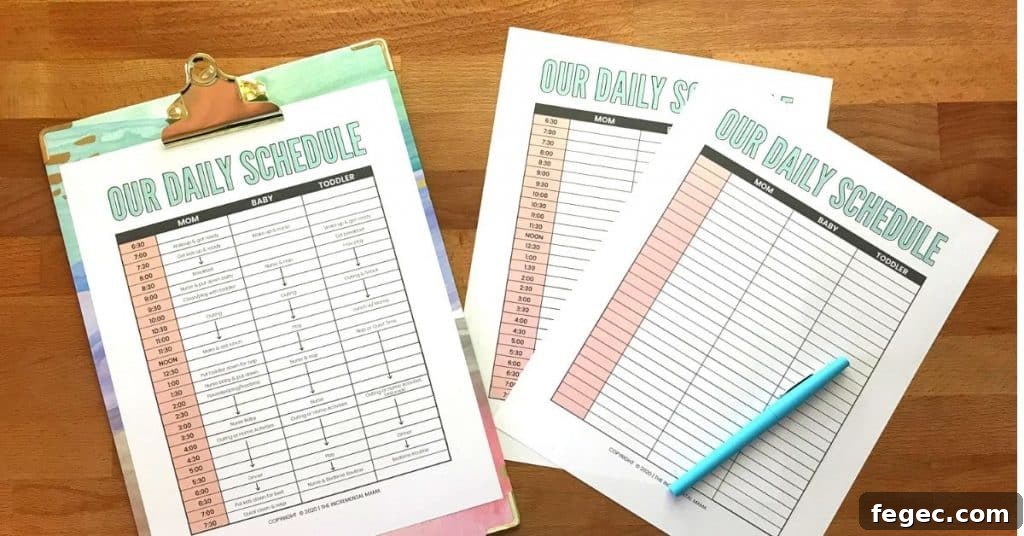
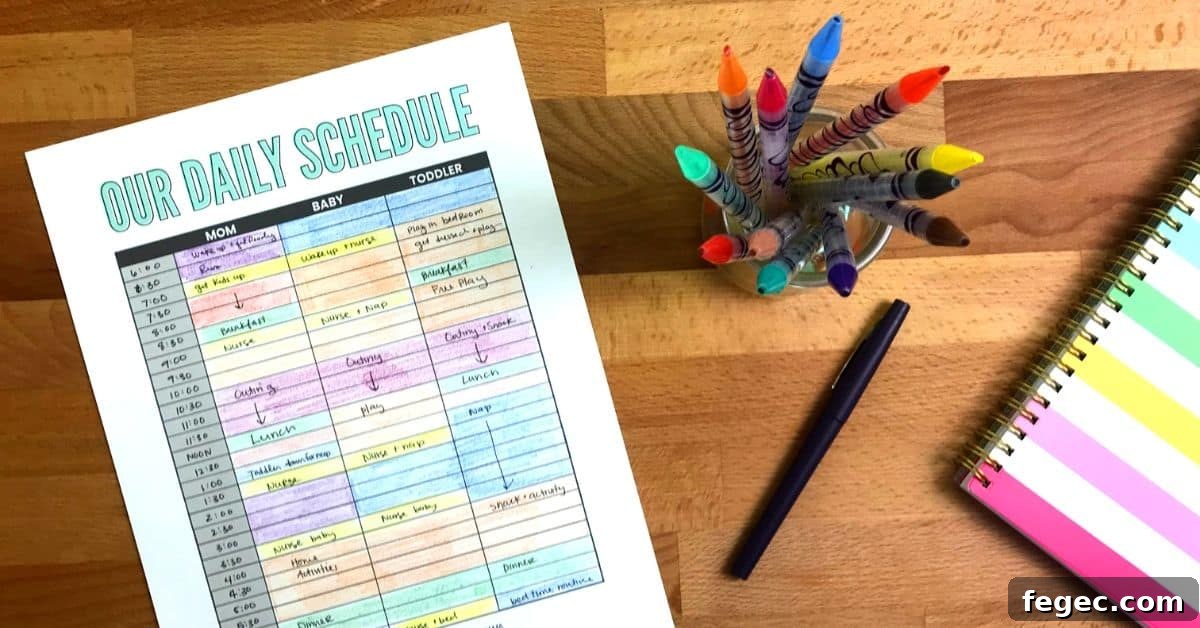
One of the best ways to bring calm and consistency to your days is to create a flexible schedule and predictable routines that work for your family. This article offers a sample stay-at-home mom schedule for a toddler and a baby, plus tips to adapt it to your needs. There’s also a free printable available that includes the sample schedule and a customizable daily template you can fill out to fit your life.
Creating a Schedule for Toddler and Baby
No two children — and no two families — are the same, so use the sample schedule below as a starting point. A practical daily plan should include:
- nursing or bottle feeds for the baby
- meals and snacks
- naps for both baby and toddler (or quiet time)
- outings and activities
- light household tasks
- enough sleep for everyone — including you
I don’t recommend rigid timetables that leave no room for life’s curveballs. Babies’ naps and feeds change, appointments come up, and unexpected things happen. The goal is predictable patterns rather than a strict clock.
But predictable routines and patterns make life easier for everyone.
Children feel more secure with consistency. When routines happen at roughly the same times each day, kids know what to expect and the household runs more smoothly. For moms, routines reduce decision fatigue: once habits are in place, you can rely on muscle memory to get through daily tasks.
A clear daily plan helps you stay organized and productive, and it gives you permission to relax during quieter moments. With the sample schedule and printable templates, you can build a routine that fits your family.

SAMPLE STAY-AT-HOME MOM SCHEDULE FOR A TODDLER AND BABY
This sample assumes a nursing baby around 3–6 months (2–3 naps a day) and a toddler who still naps. It’s a flexible framework you can shift earlier or later to match your household.
With this sample:
- Mom aims for 7–8 hours of sleep while staying on top of basic household tasks
- Baby gets 2–3 naps, about 5 nursing sessions, and roughly 15 hours of sleep
- Toddler has one nap or quiet time and about 13–14 hours of sleep
6:30 — Wake up & Get Ready
Wake a little before the kids to have a few minutes for yourself: get dressed, brush your teeth, plan the day, and center yourself. Even 15 minutes can make a big difference.

7:00 — Get Baby Up
Change the baby’s diaper, get them dressed, cuddle, and nurse. Bringing the baby up before the toddler lets you get some calm one-on-one time.
7:30 — Get Toddler Up
Potty or diaper change, get dressed, and do a quick tidy of the toddler’s room. If your toddler rises earlier than you’d like, consider tools like a toddler alarm or blackout curtains to encourage later waking and independent playtime.
8:00 — Breakfast
Feed your toddler and yourself. Meal-prepping breakfast items like muffins or waffles ahead of time saves stress in the morning and keeps things moving while you manage both kids.
8:30 — Baby Nap / Toddler Playtime
While the baby naps, encourage independent play for your toddler so you can tackle a few small chores: clean up breakfast, start a load of laundry, and spend a few focused minutes playing together. Getting your toddler involved in tidy-up tasks builds helpful habits.
10:00 — Wake Baby & Feed
Wake and nurse the baby. Use this transition to regroup and prepare for a morning outing.
10:30 — Toddler Snack & Outing
Getting out of the house daily helps everyone’s mood. Head out for a walk, park visit, zoo trip, grocery run, or a short errand. Choose outings that give you a change of scenery and, if possible, accomplish a small task like exercising or shopping.
- Walks or stroller runs
- Zoo or playground
- Gym with childcare
- Grocery shopping or errands
- Playdates or visiting friends
12:00 — Lunch
After the outing, enjoy a simple lunch and begin transitioning to a calmer afternoon. This is the time to prepare for naps or quiet time.

1:00 — Toddler Nap / Nurse & Nap for Baby
Put the toddler down for an afternoon nap or quiet time, read a short book or sing to help them settle, then nurse and put the baby down. Use this overlapping quiet period to rest, prep dinner, or do a peaceful personal activity. Even a short nap for you can be restorative.
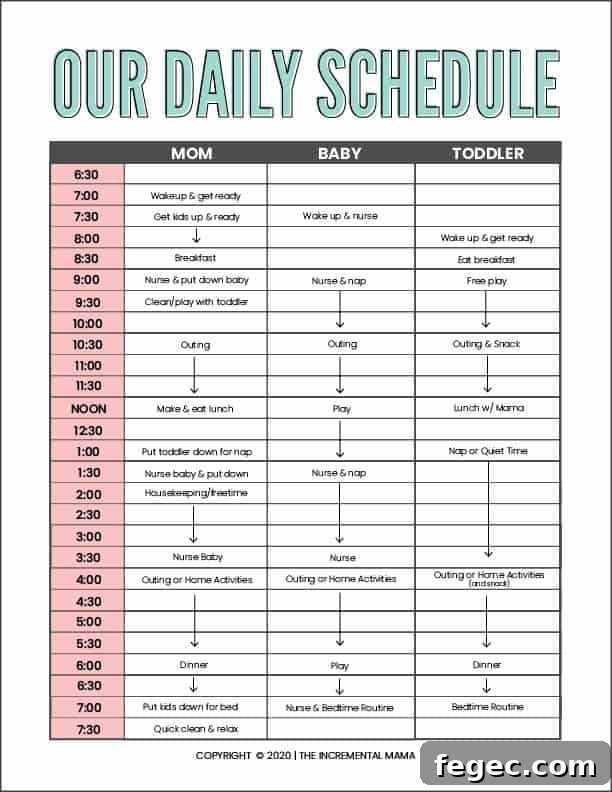
3:30 — Wake Baby & Nurse
Feed the baby after their nap so they’re content heading into the late afternoon and evening routine.
4:00 — Play or Outing #2
Choose low-key play at home or a short second outing like a walk or park trip, or run an errand. This can also be a good time for a brief workout if you’re able.
5:30 — Dinner & Family Time
Aim for a simple dinner, ideally prepped during quiet time. With the baby in a swing or bouncer, enjoy a family meal and time together before beginning the bedtime routine.
7:00 — Bedtime Routine
Start wind-down: bath, books, nursing, and lullabies. If you have a partner, divide tasks so bedtime is calm and efficient.
7:30 — Tidy House & Prep for Tomorrow
Spend 15–20 minutes together cleaning up: load the dishwasher, put away toys, and prepare any items needed for the next morning (diaper bag, dinner prep, frozen ingredient out to thaw). A quick shared tidy makes the evening more relaxing.
8:00 — Relax and Unwind
Use this time for an intentional evening routine that helps you unwind and prepares you for sleep. Screen time can interfere with rest, so try low-key activities like reading, stretching, journaling, talking with your partner, or taking a bath.
- read
- talk and share a snack with your partner
- take a hot bath
- stretch or do light yoga
- journal or plan the next day
9:30–10:30 — Bedtime
Aim for 7–8 hours of sleep if possible. When you’re well-rested, you’ll have more patience, energy, and capacity to manage parenting and household responsibilities.
Creating Your Own Schedule for a Toddler and Baby
Use the sample schedule as a template and customize it around these key elements:
- sleep times
- meals and snacks
- daily outings and fresh air
- exercise
- simple cleaning routines
- meal prep
This season of life is busy but full of special moments. Grab the printable daily schedules (sample and blank templates) to map out a routine that supports your family and makes your days more manageable.
You’ve got this, mama!
READY TO GET YOUR LIFE ORGANIZED?
If you want more tools, an organized home toolkit with customizable printables and short instructional videos can help you move from overwhelmed to in control. It’s a practical resource to simplify daily life and routines.
ADDITIONAL RESOURCES:
- The 10 Best Double Strollers for a Newborn & Toddler
- How to Prepare Your Toddler for a New Baby
- How to Get Stuff Done with a Baby and a Toddler
- How to Survive a Toddler and Newborn