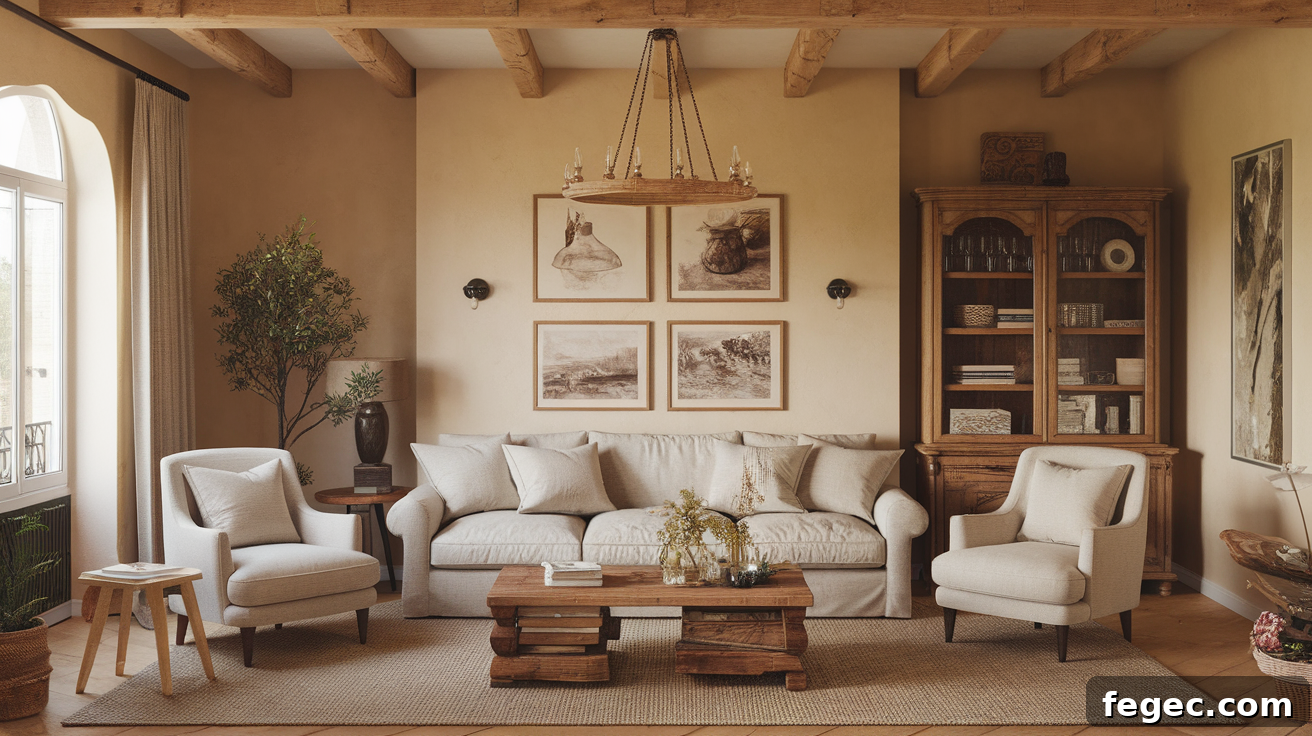
People are drawn to French farmhouse style because it celebrates imperfection and comfort. It emphasizes natural woods, soft color palettes, and objects that grow more beautiful with age.
The look blends old-world charm with everyday comfort to create homes that feel relaxed, practical, and inviting.
This guide explains the defining features of French farmhouse design, offers room-by-room ideas, shares budget-friendly tips, and points to the kinds of pieces that bring the style to life.
If you want a home that feels both elegant and lived-in, start with the basics below.
What is French Farmhouse Style?
French farmhouse interiors typically use walls painted in cream, warm white, or pale blue to form a calm backdrop for furnishings and accents. Natural materials are central to the aesthetic.
Wood appears in floors, furniture, and exposed ceiling beams, often showing the marks of time. Stone surfaces on hearths or countertops add texture and connect interiors with the landscape.
Antique finishes and gently worn furniture help define the look. Pieces with chipped paint or faded colors suggest history and create a welcoming, human scale.
These small signs of age and use—soft edges, patina, and subtle wear—give rooms warmth and authenticity. Exposed wooden beams are a distinctive architectural feature, grounding spaces and drawing the eye upward, often paired with plaster or textured walls that remain understated.
French Farmhouse vs. French Country vs. Modern Farmhouse
Several related styles share similarities but have different moods and design cues. Below is a concise comparison to help you distinguish them at a glance.
| Feature | French Farmhouse | French Country | Modern Farmhouse |
|---|---|---|---|
| Colors | Soft whites, creams, pale blues | Warm yellows, soft reds, lavenders | White, black, gray contrasts |
| Materials | Raw wood, stone, aged iron | Mixed woods, toile, copper accents | Shiplap, industrial metals, reclaimed wood |
| Furniture | Time-worn, mismatched pieces | Curved legs and ornate details | Cleaner lines and simpler silhouettes |
| Patterns | Subtle stripes, soft florals | Bold florals, toile scenes | Minimal patterns and plaids |
| Overall Feel | Rustic, lived-in, humble | Refined yet cozy | Bright, updated, streamlined |
| Typical Elements | Farm tables, exposed beams | Decorative upholstery, ornate accents | Black hardware and metal touches |
French Farmhouse Colors and Materials
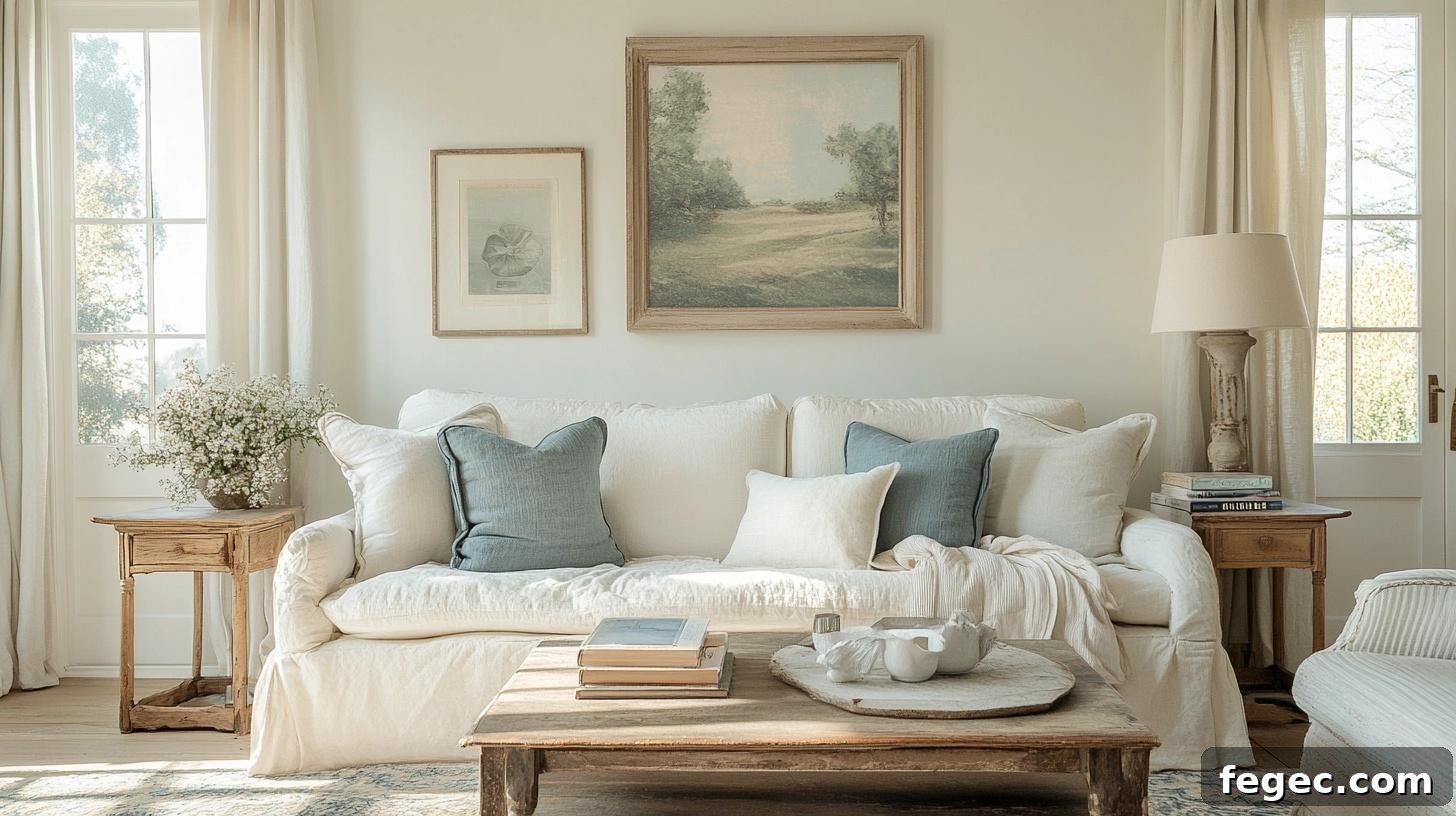
French farmhouse design relies on a restrained palette and honest materials to create warm, collected interiors that feel like they evolved over time.
Soft Neutrals and Pastels
Begin with warm whites and creams for walls and major furnishings to keep rooms bright and airy. Muted blues evoke faded shutters or distant landscapes and work beautifully on cabinets or painted pieces.
Sage and soft green tones introduce a natural freshness and pair seamlessly with neutrals when used as accents or cabinet colors.
The key is subtlety—colors are never bright or aggressive, and finishes often look slightly weathered to reinforce the sense of history.
Rustic Textures
Linen appears on curtains, tablecloths, and bedding, adding a tactile, lived-in softness. Stone floors, countertops, and fireplace surrounds introduce organic weight and texture.
Wood is omnipresent, from wide-plank floors to farmhouse tables and ceiling beams. Natural grain, knots, and small imperfections are celebrated rather than hidden.
Worn metals—iron, oxidized brass, or brushed steel—show up in lighting, hardware, and accessories. Their patina contributes to the overall layered look.
Patina and gentle wear unify the scheme: slightly faded colors, rubbed edges, and surfaces that reveal years of use bring authenticity and warmth.
Room-by-Room Styling Ideas
These practical suggestions make it easy to introduce French farmhouse style into every room with modest changes that deliver strong results.
Living Room
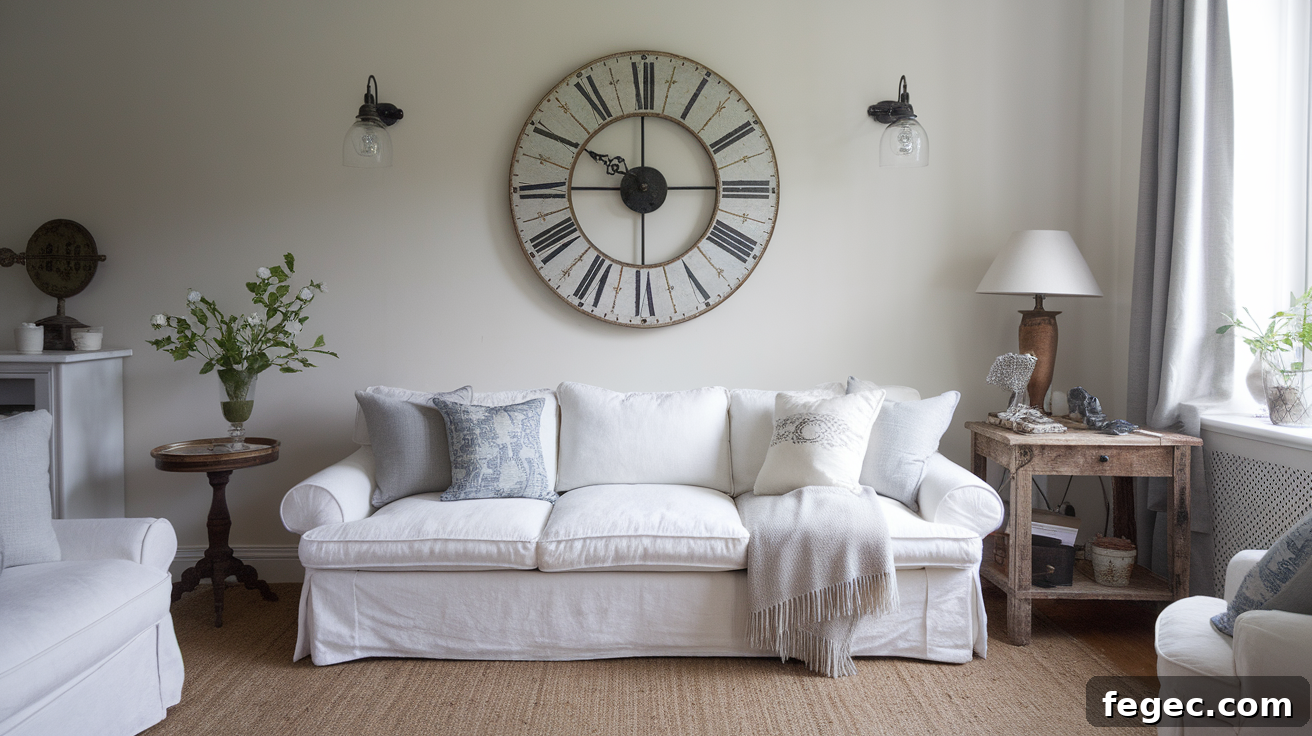
Comfort is central in the living room. Choose slipcovered sofas in white or natural linen for an easy, relaxed look. Add one or two vintage finds—a clock, side table, or trunk—to give the room personality.
Layer textured throws and pillows in soft blues, creams, and neutrals to create a cozy, lived-in atmosphere.
Kitchen
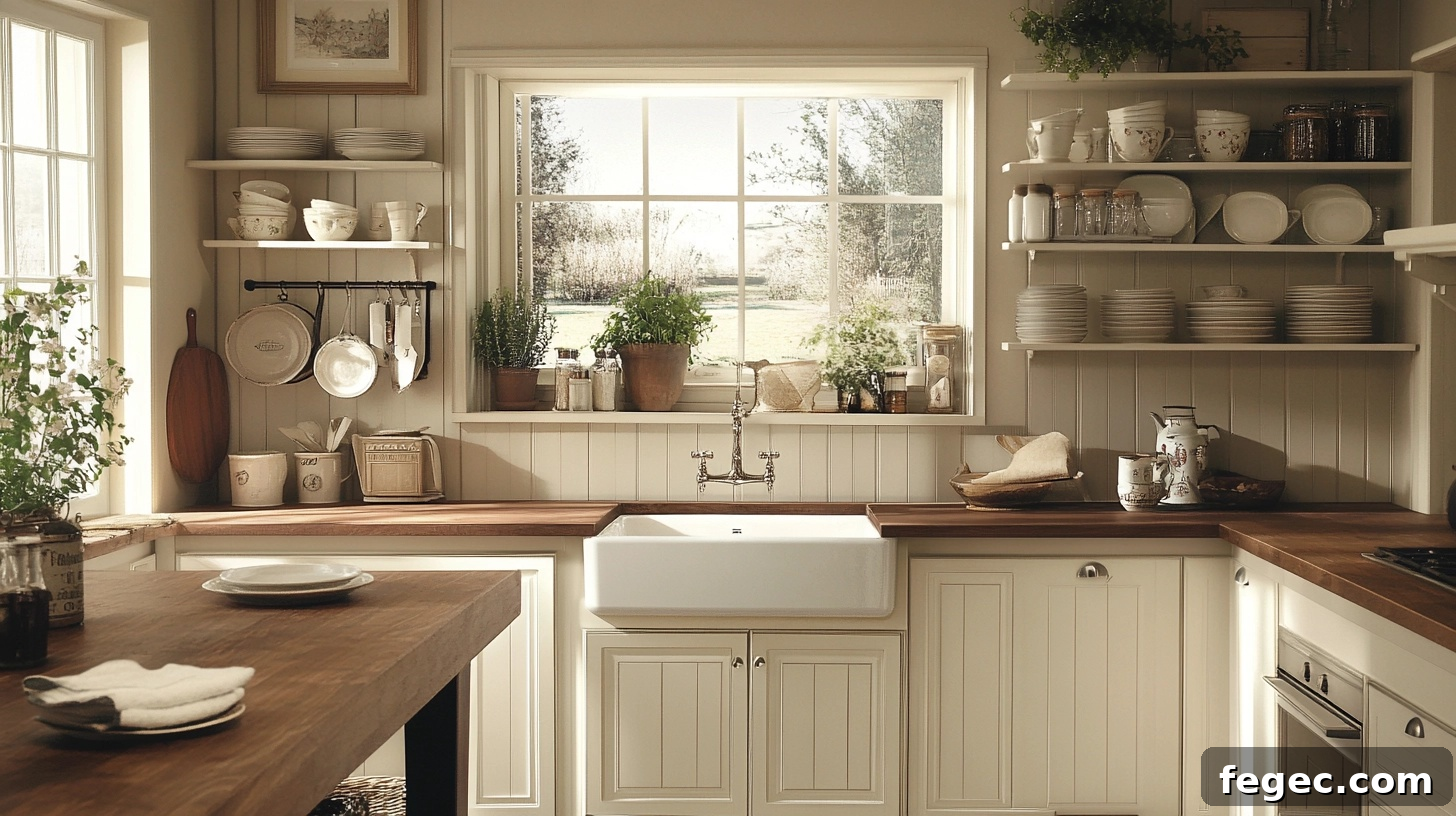
The farmhouse sink, often in white porcelain, anchors the kitchen. Open shelving keeps everyday dishes visible and part of the décor, while butcher block or worn wood countertops add warmth and show character over time.
Practical, attractive storage—baskets, hooks, and reclaimed wood shelves—complements the functional, welcoming feel.
Bedroom
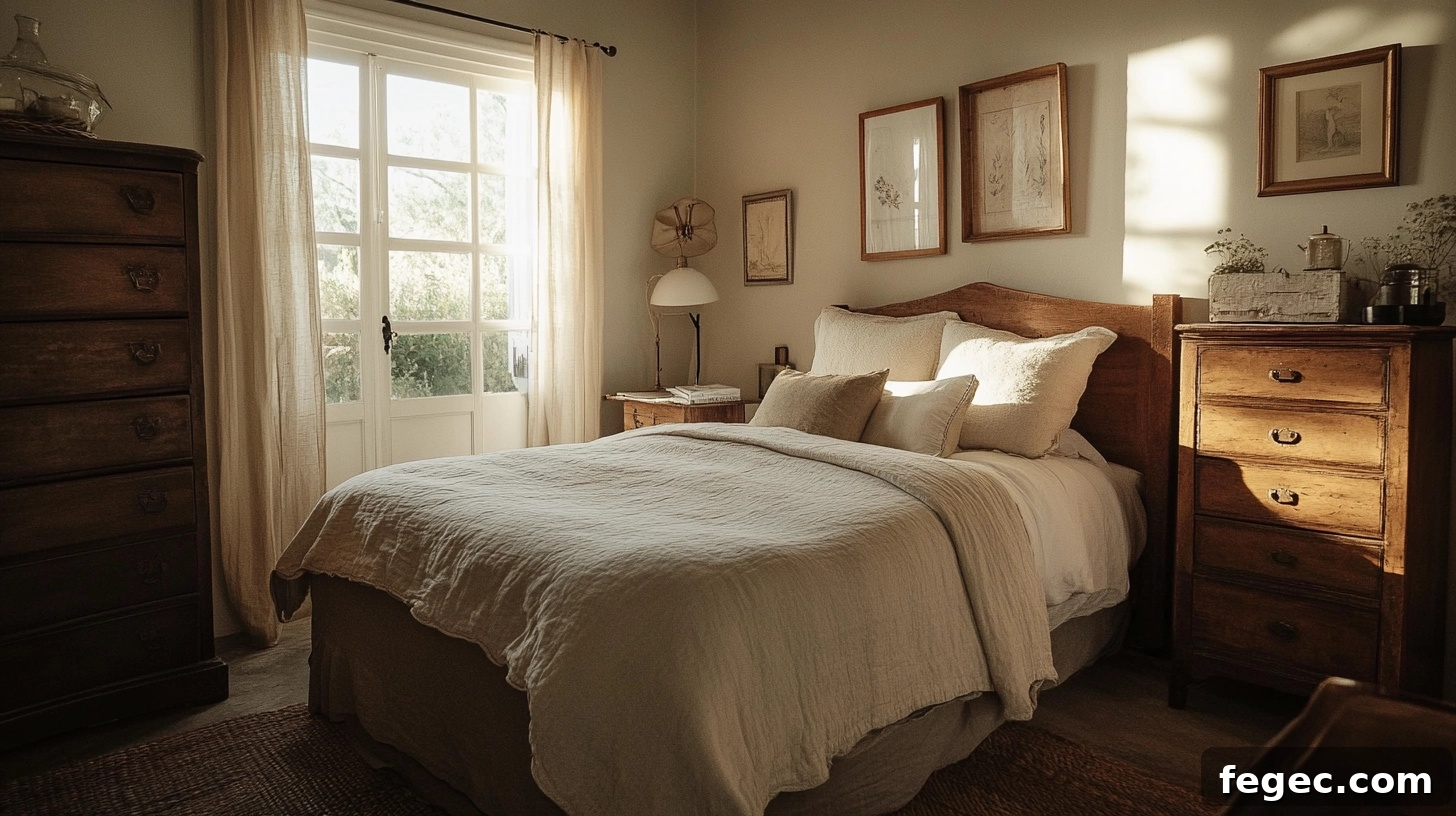
Bedrooms should feel calm and restful. Use linen or cotton bedding in whites and creams, and choose soft, layered lighting from table lamps or wall sconces.
An antique dresser or slightly distressed bedside table adds history and charm while remaining practical for everyday use.
Dining Room
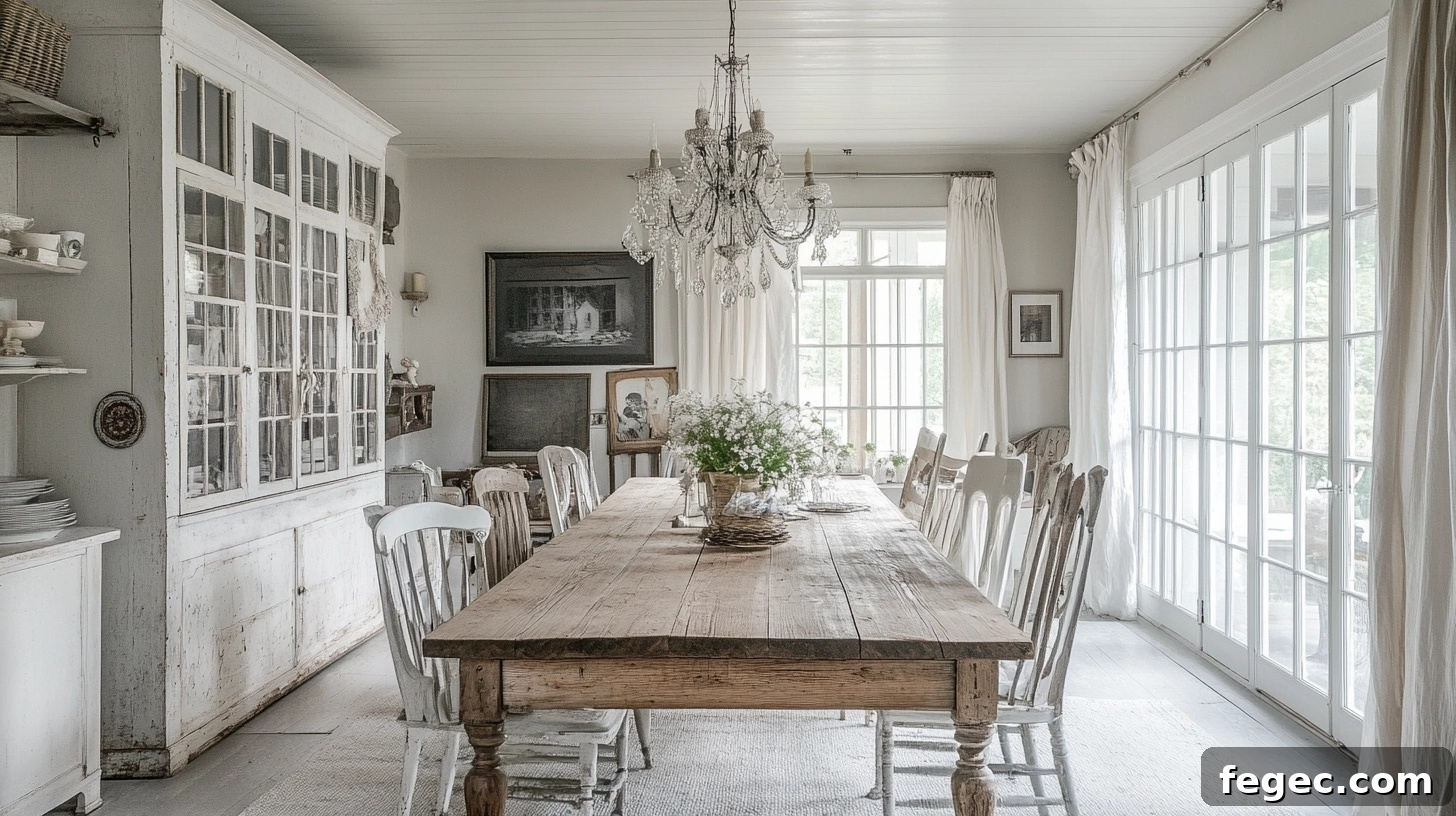
A large wooden dining table—natural or lightly whitewashed—anchors the space. Mix and match chairs for an effortless, collected look, and hang a rustic chandelier for warm, ambient light that feels inviting without being ornate.
Bathroom
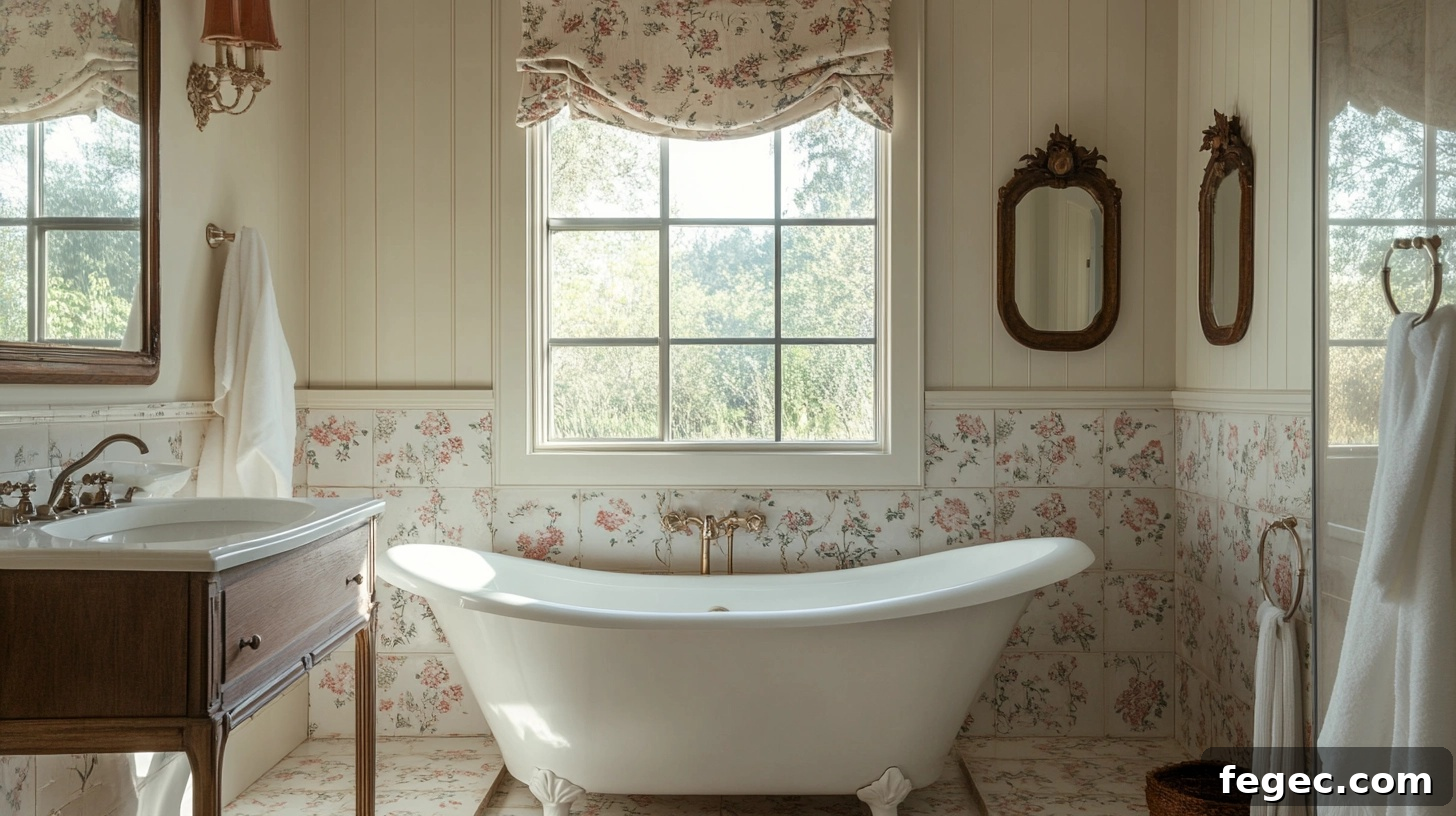
The French farmhouse bathroom pairs old-world details with clean fixtures. A freestanding tub becomes a focal point, while muted floral tiles or aged mirrors add personality without cluttering the space.
Decor Essentials and Styling Tips
Small additions and thoughtful pairings can achieve an authentic French farmhouse look without a major renovation.
Signature Decor Items
Cream or white ceramic pitchers work as vases or display pieces on shelves and tables. Ladder-style shelving offers casual storage and display for dishes, plants, and books.
Framed botanical prints or simple herb illustrations introduce subtle natural motifs and complement the soft color palette.
Mixing Old and New
Anchor each room with one standout vintage item—a cabinet, sideboard, or table—and balance it with newer, simpler furnishings. Choosing pieces for material and form rather than age helps blend antiques and modern items smoothly.
New upholstered items in neutral fabrics often pair well with reclaimed wood or worn finishes, creating a relaxed yet intentional look.
Fabrics and Prints
Ticking stripes and narrow-lined fabrics are ideal for pillows, upholstery, or curtains, offering classic rural charm. Use toile sparingly—on a chair or as framed fabric—to add character without overpowering the room.
Soft, faded florals provide gentle pattern and texture while staying true to the understated aesthetic.
Budget-Friendly Ideas and DIY Projects
Distressed paint techniques instantly age ordinary furniture: paint a piece in cream or white, then sand edges lightly to reveal wood beneath for a naturally worn finish.
Thrift-store finds—solid wood furniture with good structure—can be refreshed by changing hardware and adding simple upholstery or linen cushions. These inexpensive updates create custom pieces with personality.
Handmade accents—linen runners with raw edges, dried herbs in jars, or framed pressed flowers—add warmth and story while keeping costs low.
Seasonal Styling Ideas
French farmhouse homes adapt easily to the seasons through small shifts in color, texture, and natural decor that maintain the core aesthetic.
Spring/Summer
Lighten rooms by opening curtains and swapping heavier textiles for lightweight linen throws and cotton pillow covers in subtle stripes or small florals. Fresh, casually arranged flowers in pitchers or glass bottles enhance the season’s brightness.
Fall/Winter
Introduce warmth with knit throws and layered textures in cream and oatmeal tones. Cluster candles on wooden trays or stone surfaces for soft, intimate light. Dried wreaths made from hydrangea, lavender, or wheat provide low-maintenance, seasonal charm.
Final Thoughts
French farmhouse decorating is personal and evolving—there’s no single formula to follow. Gather pieces that resonate with you and let rooms develop over time.
Small imperfections—faded finishes, light scratches, and worn edges—tell the story of a lived-in home and bring the style to life. Start slowly with a few meaningful items and add only those pieces that truly make you smile.
Frequently Asked Questions
What makes a French farmhouse different from a modern farmhouse?
French farmhouse emphasizes softer colors, antiques, and gentle curves, while modern farmhouse favors stronger black-and-white contrasts, cleaner lines, and more streamlined details.
Is this style good for small spaces?
Yes. A light palette, multipurpose furniture, and a focus on fewer, meaningful pieces make French farmhouse well suited to smaller homes.
Can I mix French farmhouse with Scandinavian or boho decor?
Yes. French farmhouse blends naturally with Scandinavian design through shared light colors and natural materials, and it pairs well with boho textures if you keep a cohesive palette and emphasize organic elements.