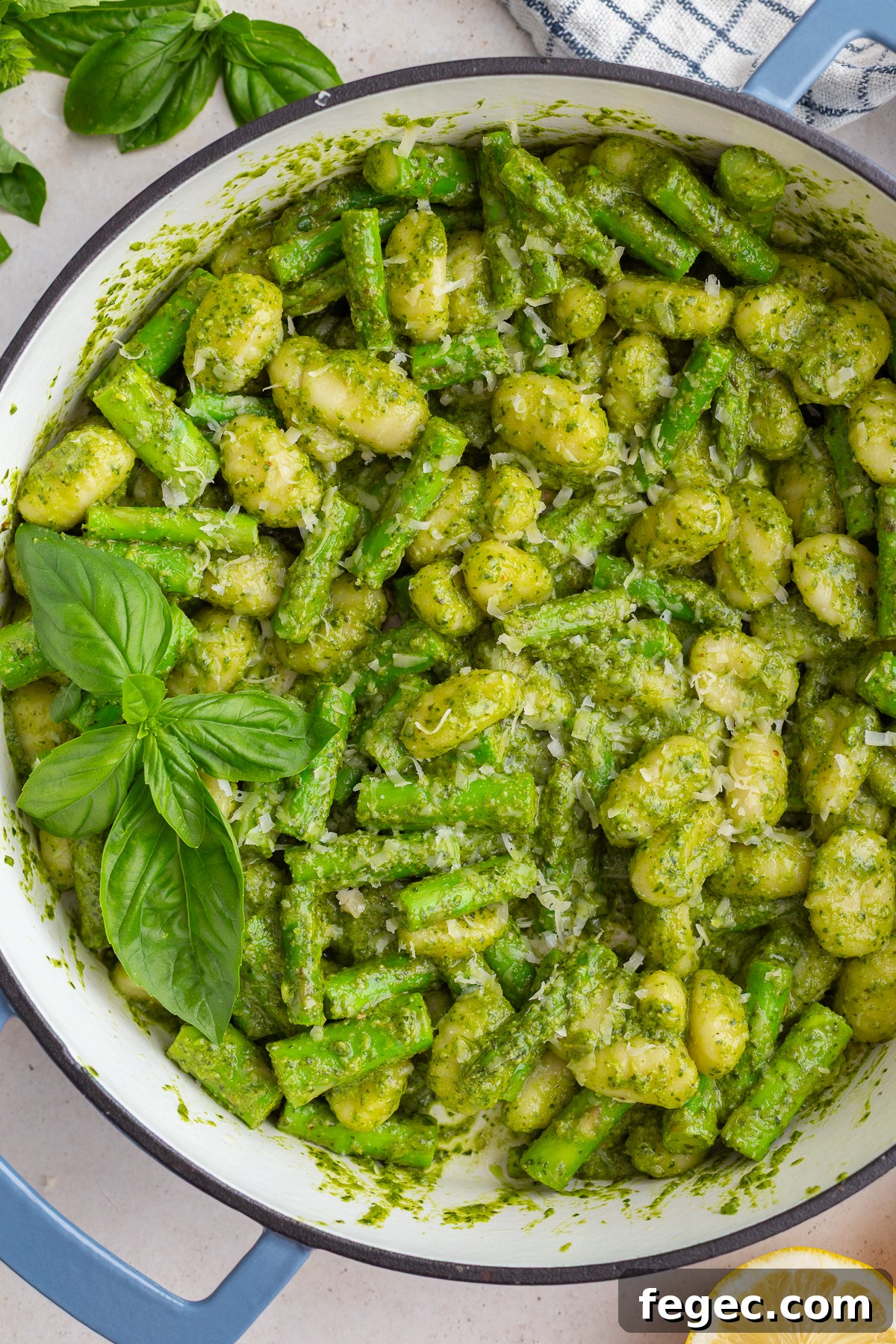
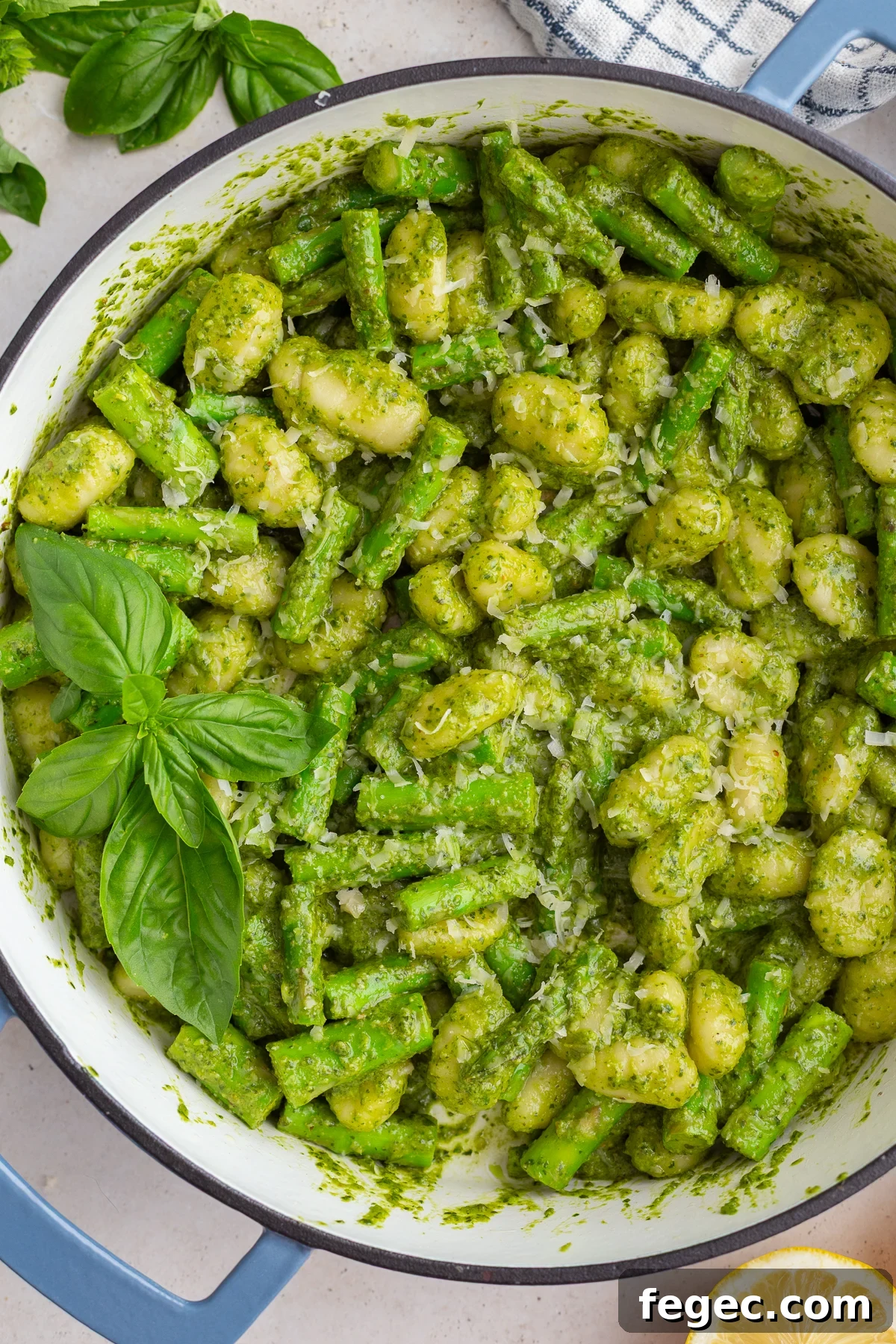
This Pesto Gnocchi is pan-fried with asparagus and tossed in a bright basil pesto. It’s full of fresh flavor and comes together quickly, making it an ideal weeknight dinner that still feels special.
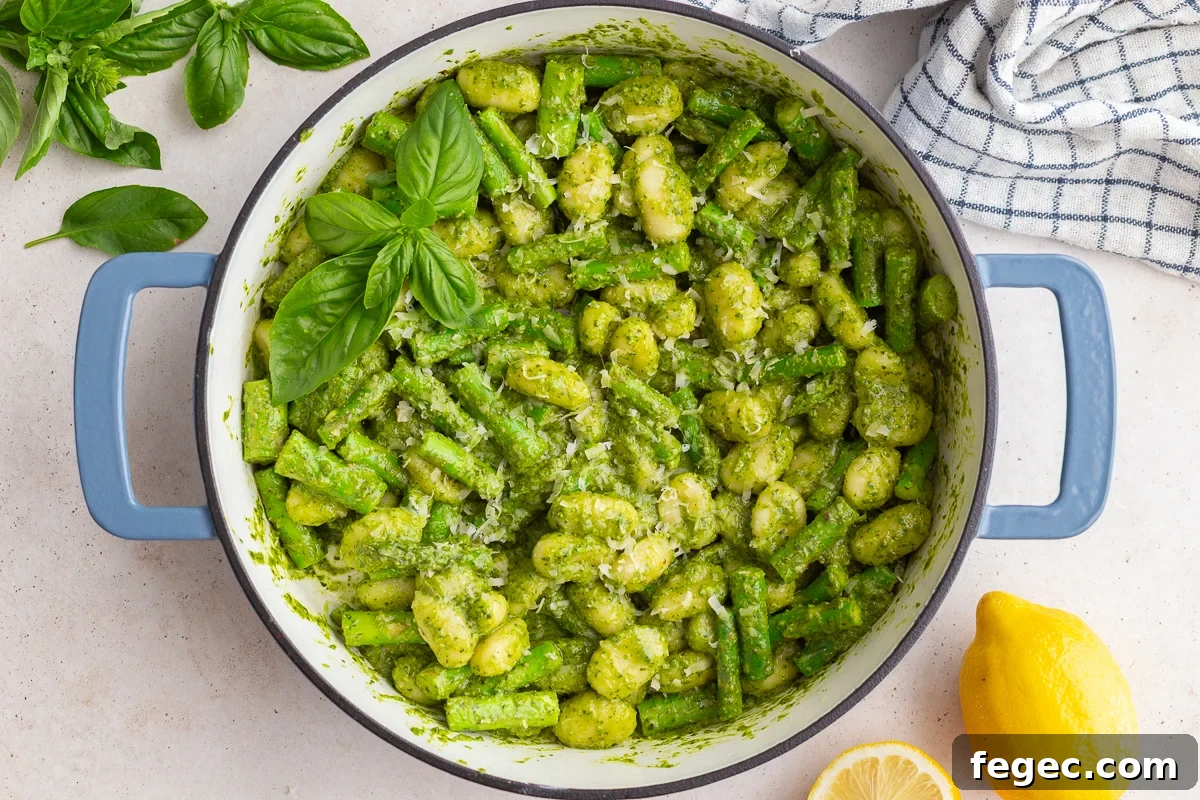
Why you’ll love this easy weeknight dinner!

This dish looks and tastes like something you’d order at a nice restaurant, yet it’s incredibly simple. Active prep is under 20 minutes, and the total cook time is short—perfect for busy nights.
If you’ve never tried gnocchi, you’re in for a treat. Gnocchi are small Italian dumplings typically made from potato and flour. They have a pillowy texture that pairs beautifully with a fresh pesto.
Highlights:
- Quick & easy: Ready in about 20 minutes—perfect for weeknights.
- Fresh flavor: Homemade basil pesto with lemon and parmesan brightens the dish.
- Flexible: Serve warm, at room temperature, or chilled for a pesto salad-style side.
- Customizable: Stir in cream for a richer sauce or swap vegetables to suit the season.
Pronunciation note: gnocchi = nyawk-kee
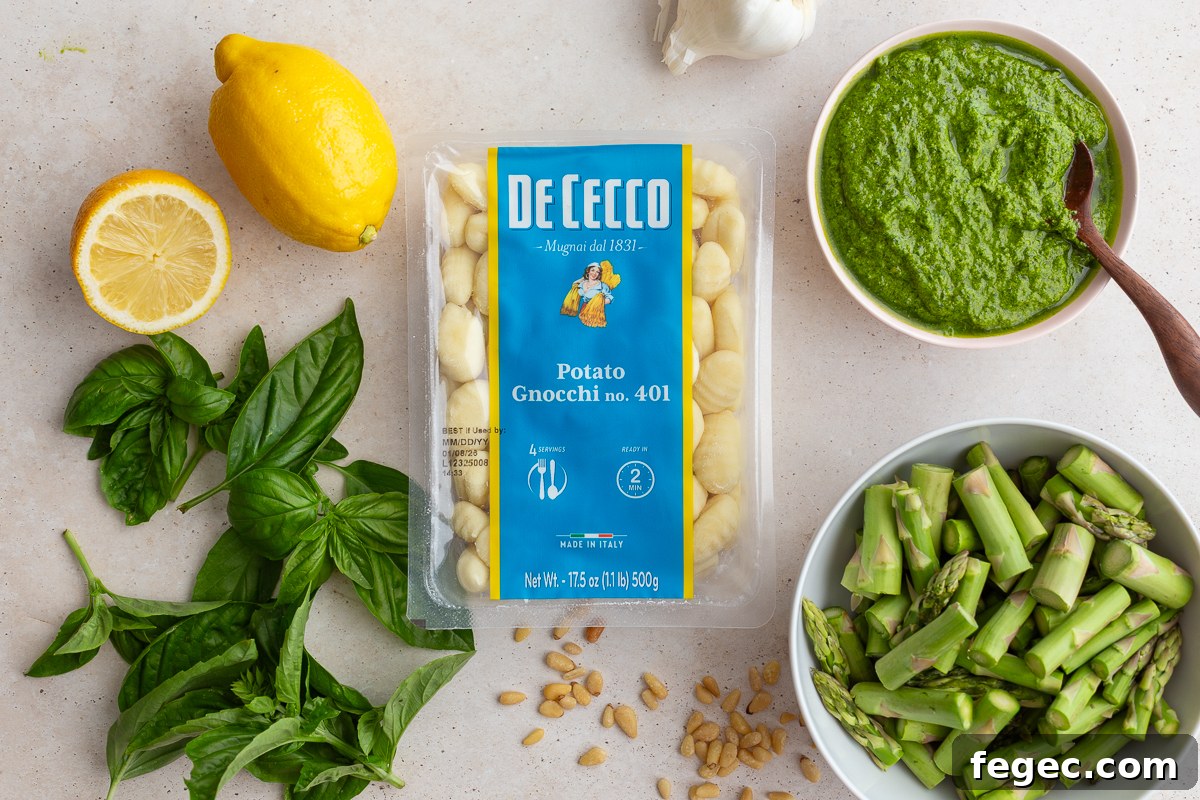
Ingredients for this gnocchi recipe
This simple gnocchi with pesto combines tender gnocchi, vibrant basil pesto, and crisp asparagus. Use the ingredients below as a baseline and adapt to taste.
- Gnocchi – Any store-bought or homemade gnocchi works: dried, refrigerated, or frozen. Potato gnocchi is classic.
- Asparagus – Adds color and a pleasant bite. You can substitute broccoli, green beans, peas, zucchini, or Brussels sprouts.
- Pesto – Use store-bought if short on time, or make a simple basil pesto with toasted pine nuts (or walnuts), garlic, lemon juice, basil leaves, parmesan, salt, and olive oil.
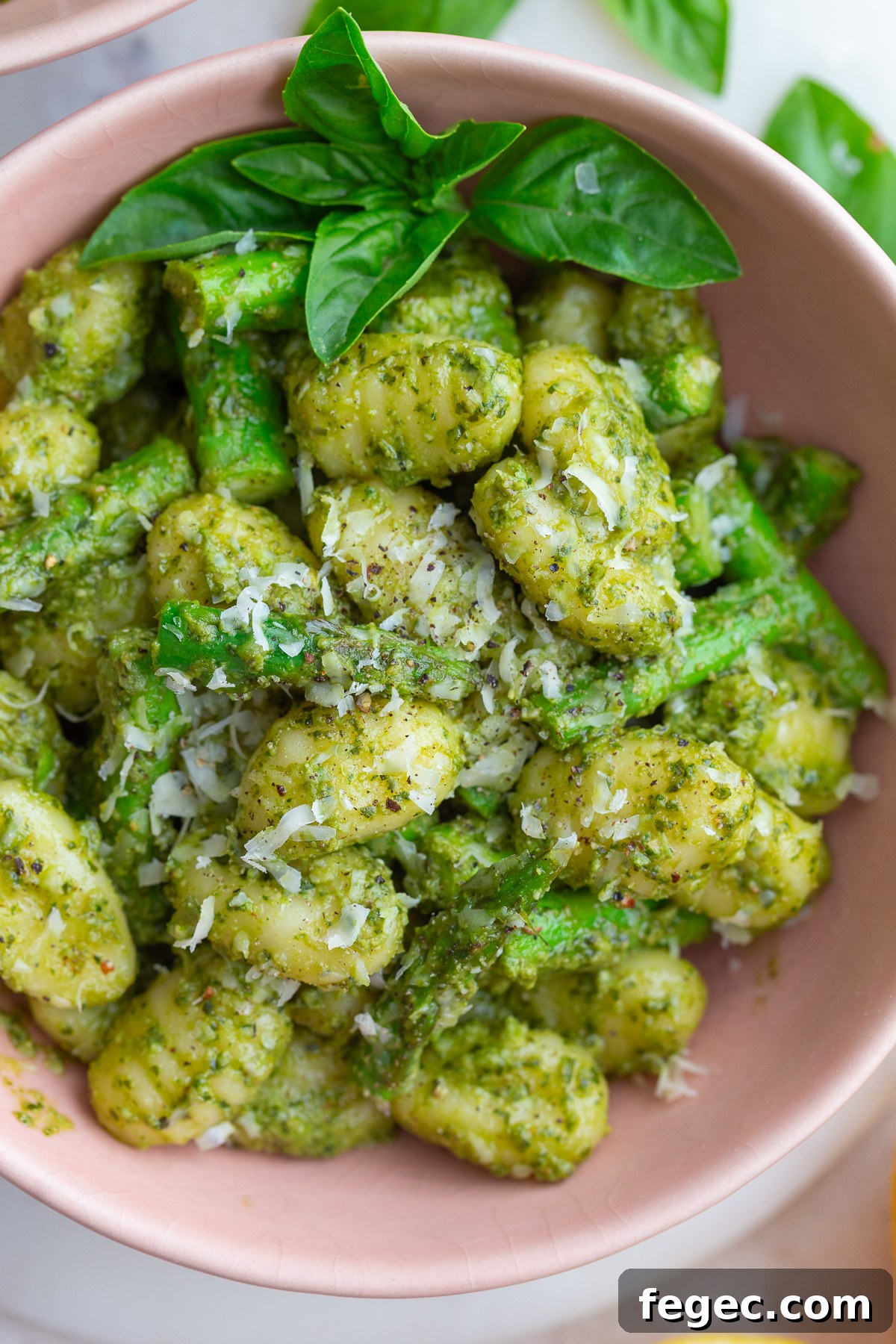
How to make gnocchi with pesto
The method is straightforward: prepare the pesto, cook the gnocchi, sauté asparagus, then combine everything in a skillet so the sauce clings to the gnocchi. Below is a clear step-by-step overview—full instructions follow in the recipe card.
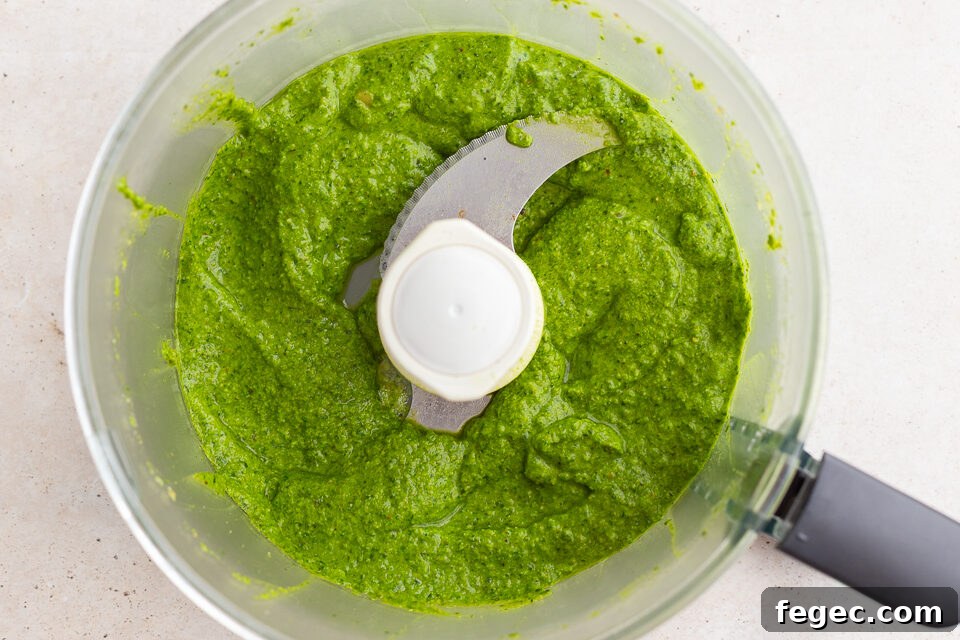
- Make the pesto – If not using store-bought, blend pine nuts (or walnuts), garlic, lemon juice, basil, parmesan, and olive oil to a bright, slightly textured sauce.
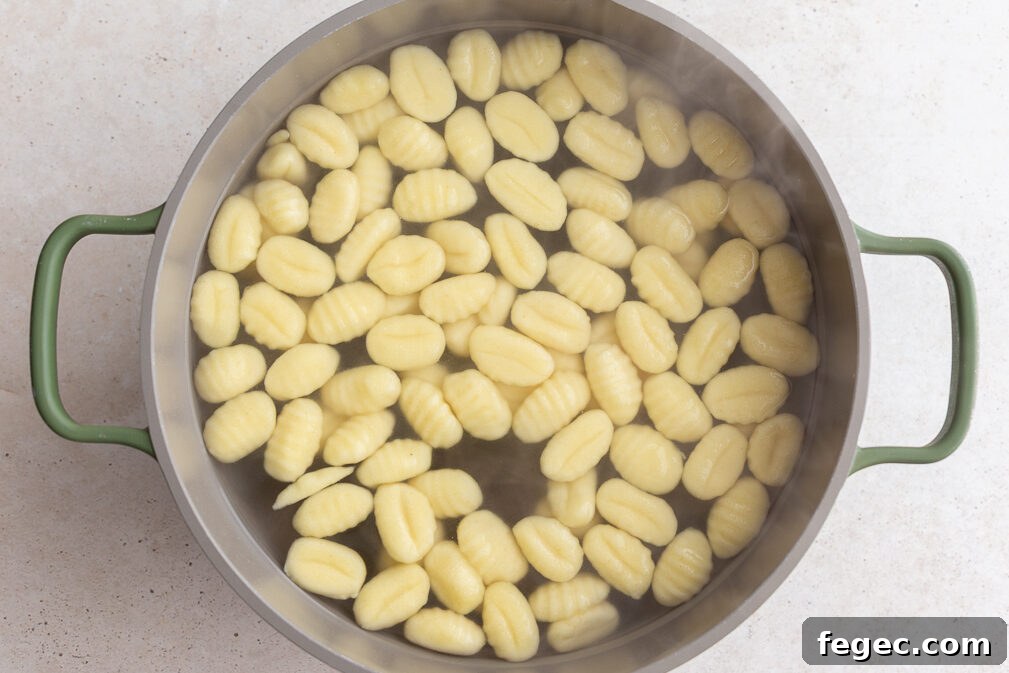
- Cook the gnocchi – Boil according to package directions (or until just tender), then drain, reserving some cooking water.
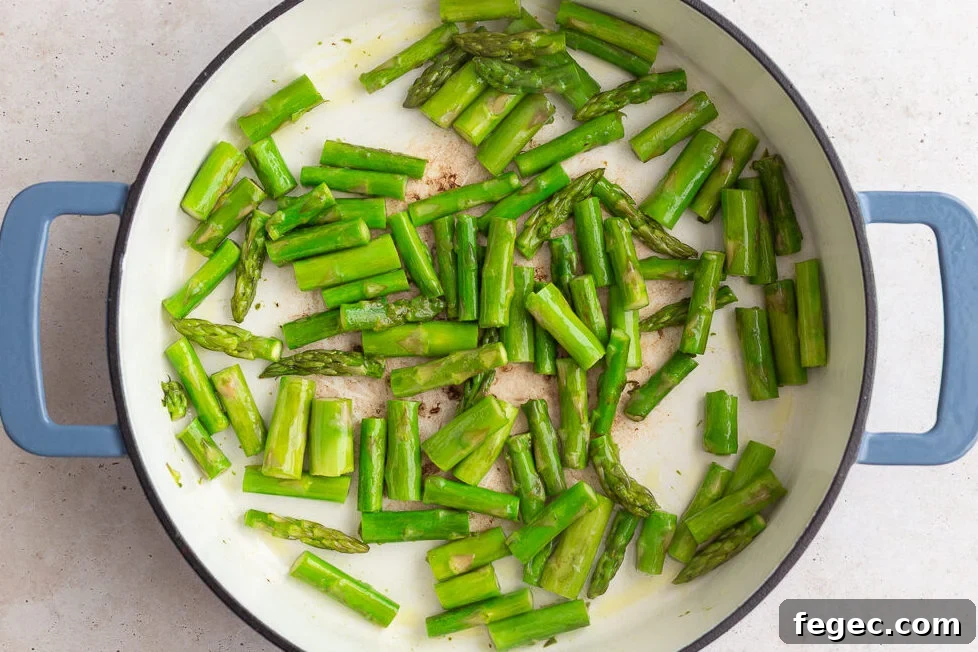
- Sauté the asparagus – Heat oil and sauté asparagus with garlic until crisp-tender and bright green.
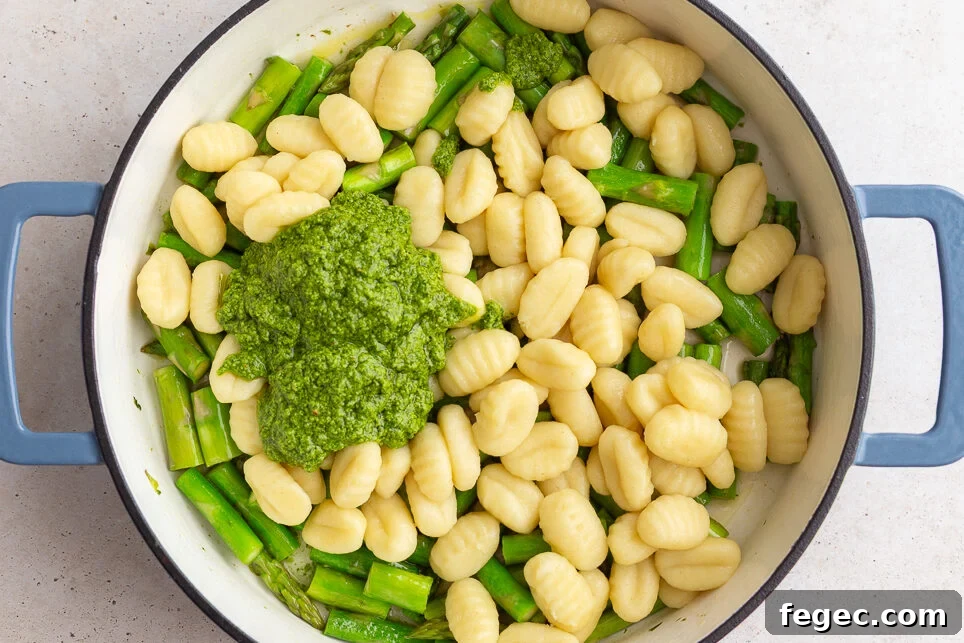
- Combine – Add cooked gnocchi and pesto to the skillet with a splash of reserved cooking water. Toss gently until the sauce coats the gnocchi. Finish with lemon, salt, and pepper to taste.
Recipe variations
- Vegan option – Swap parmesan for a vegan alternative when making pesto, and check that your gnocchi is vegan (some contain egg).
- Gluten-free option – Use a gluten-free gnocchi (fresh, frozen, or shelf-stable cauliflower gnocchi) if you need to avoid gluten.
Expert Tips
- Make it creamy – Stir in ½ cup heavy cream, cream cheese, or Greek yogurt with the pesto for a rich, silky sauce.
- Reserve cooking water – A few tablespoons of starchy pasta water help the pesto cling to the gnocchi and create a cohesive sauce.
- Avoid overcooking – Cook gnocchi slightly under the package time so it finishes in the skillet without becoming mushy.
- Add protein – Grilled shrimp, chicken, salmon, steak, or sautéed tofu are excellent additions if you want more substance.
Storage + reheating
- Refrigerate leftovers in an airtight container for up to 3 days.
- Reheat gently in a skillet with a splash of water, cream, or broth to loosen the sauce.
- Avoid freezing the finished dish—gnocchi can become mushy. Freeze pesto separately in ice cube trays for easy portions later.
Frequently Asked Questions
Yes. Homemade pesto tastes brightest, but quality store-bought pesto is a convenient, time-saving option.
Broccoli, peas, spinach, zucchini, and green beans all pair well with pesto gnocchi.
It’s best not to freeze the assembled dish. Freeze pesto on its own for best results.
Traditional gnocchi contains wheat, but there are many gluten-free alternatives available.
More Italian recipes to try:
- Cavatappi pasta with cream sauce
- Tofu Caprese skewers
- Hearts of palm pasta
- Chickpea pasta
Pesto Gnocchi
Ingredients
- 1 tablespoon extra virgin olive oil
- 1 pound dried gnocchi (or fresh/frozen adjusted to package directions)
- 1 bunch asparagus, trimmed and cut into 2″ pieces
- 1/2–3/4 cup pesto, store-bought or homemade
- Salt and pepper, to taste
- Optional: 1/2 cup heavy cream for a creamy sauce
- Optional toppings: toasted pine nuts, flakey sea salt, extra basil
Instructions
- Bring a large pot of salted water to a boil. Keep it at a steady boil for the gnocchi.
- If making pesto from scratch: pulse pine nuts, garlic, and lemon juice in a food processor until roughly chopped. Add basil and parmesan and pulse until broken down. With the processor running on low, drizzle in about 1/3 cup olive oil until combined. Season with salt and pepper.
- Heat 1 tablespoon olive oil in a large skillet over medium heat. Add asparagus and a clove of minced garlic, and sauté for 2–3 minutes until crisp-tender.
- While the asparagus cooks, boil the gnocchi according to package directions but remove them 1–2 minutes before the recommended time so they finish cooking in the pan. Reserve 1/2 cup of the gnocchi cooking water, then drain the gnocchi.
- Add the gnocchi to the skillet with asparagus. Spoon in 1/2 cup pesto and 1/4 cup reserved cooking water, stirring gently to coat. Cook for about 1 minute until the sauce loosens and clings to the gnocchi. Add more reserved water as needed to reach the desired consistency.
- Taste and season with salt, pepper, and a squeeze of lemon if desired. Serve warm, at room temperature, or chilled. Garnish with pine nuts, extra basil, or flakey sea salt.
Notes
- Start with 1/2 cup pesto and increase to taste.
- Adjust gnocchi cooking time based on whether they are fresh, frozen, or dried.
- Substitute vegetables freely—peas or small broccoli florets work well.
- For a creamier sauce, add 1/2 cup heavy cream, cream cheese, or Greek yogurt with the pesto.
Nutrition (approximate per serving)
- Calories: 326 kcal
- Carbohydrates: 47 g
- Protein: 8 g
- Fat: 12 g
- Fiber: 5 g
Nutrition information is an estimate and should be used as a guideline only.