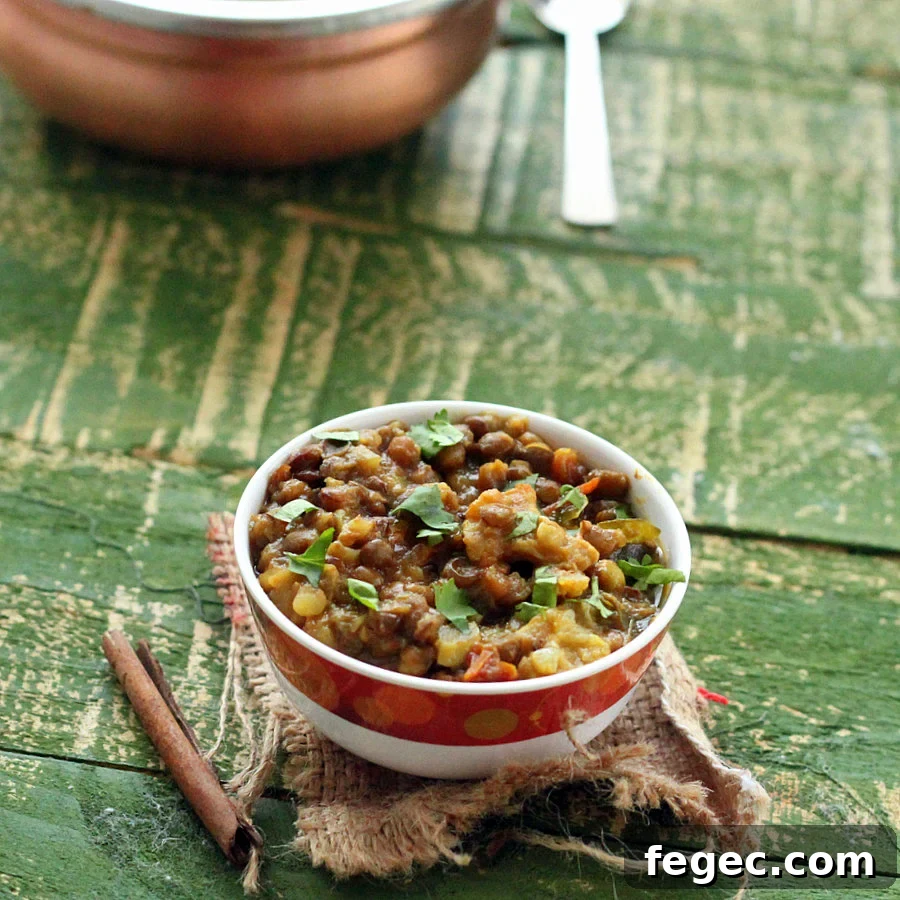
Whole brown red lentils—sabut masoor or massar—are pinkish-brown lentils that make a deeply flavorful, earthy stew. Brown on the outside and pink-orange within, they pair beautifully with warm spices. Cinnamon, cardamom, and bitter greens such as fenugreek or curry leaves add complexity and lift this dal to another level.
This recipe uses fresh curry leaves. You can find fresh curry leaves at Indian grocery stores; they freeze well in an airtight container for months. Dried curry leaves or curry leaf powder are convenient alternatives and keep much longer if you make dals frequently.
The curry tree is tropical; its leaves—called curry leaves, kadi patta, or sweet neem—are used widely in stews, dry vegetable dishes, and chutneys. Fenugreek (methi), fresh or dried, lends a pleasantly bitter note that complements lentils and beans. Methi deserves its own spotlight, but even a small amount brightens this stew.
Other recipes using whole masoor that you might enjoy include:
Whole Masoor and Mung bean stew with shallots — a favorite combination.
Missir Wot — an Ethiopian-style red lentil stew.
North Indian-style sabut masoor preparations—simple and comforting.
For a wider selection of lentil and bean stews, search collections of related recipes and adapt spices and vegetables to taste.
Overview of steps:
Soak the lentils for at least a couple of hours.
Chop your vegetables and herbs.
Gather fresh curry leaves if available.
Prepare the tadka (tempering) in hot oil to release flavor.
Add the lentils, water, salt and spices and cook until the lentils are tender.
Serve hot—with a drizzle of cashew cream, with rolls or crackers as a stew, or alongside flatbreads as a classic dal.
Curried Lentil Soup with Cauliflower.
Red Lentil Stew with Cauliflower — Gobi Waali Sabut Masoor
Allergy Information: dairy-free, egg-free, corn-free, soy-free, yeast-free, gluten-free.
Yields: 2–4 servings
Ingredients:
1/2 cup dry whole red lentils (masoor), soaked at least 2 hours or overnight
2 cups water
2 teaspoons oil
1/4 teaspoon mustard seeds
1/4 teaspoon cumin seeds
Generous pinch of asafetida (hing), optional
6–8 curry leaves
1/2 medium onion, chopped
1 serrano chili, chopped, or chili flakes to taste
4–5 garlic cloves, finely chopped
1/2 inch ginger, minced
1–2 medium tomatoes, chopped
1/2 teaspoon salt, or to taste
1/2 teaspoon garam masala
1/4 teaspoon turmeric powder
3/4 cup chopped cauliflower
Variations: swap fennel seeds for mustard and cumin, or add other vegetables like celery, carrots, broccoli, or leafy greens. You can also use similar lentils such as Spanish pardina, green lentils, or puy.
Method:
1. Soak the lentils for at least 2 hours or overnight. Drain and set aside.
Serve topped with cashew cream and chopped cilantro, with bread rolls, crackers, or Indian flatbreads such as roti or naan, or alongside rice.