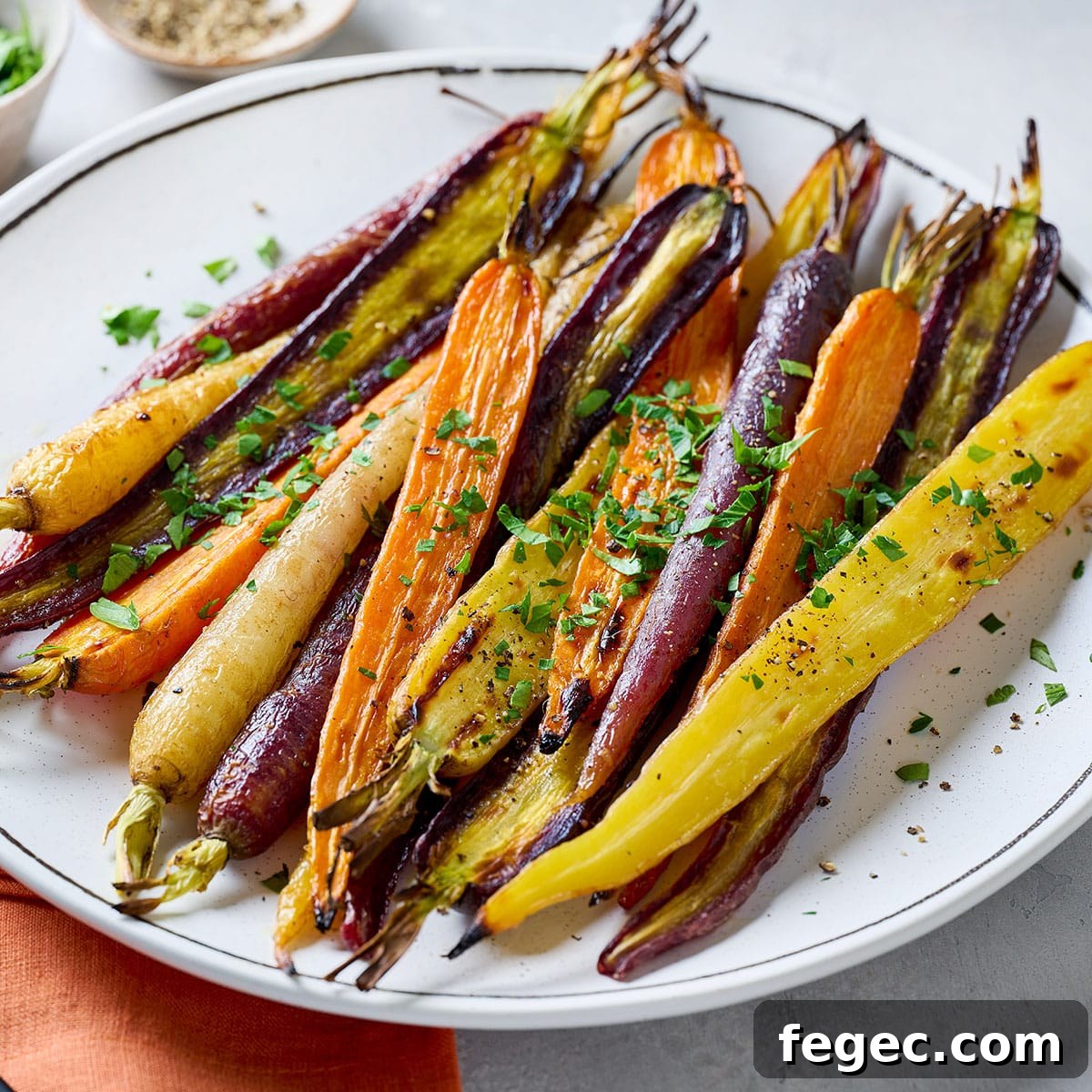
As a chef, I return to recipes like this again and again—simple techniques that let the ingredient speak for itself. Roasting at high heat concentrates the natural sugars in carrots, building depth and complexity without any fuss.
Whether you need a quick side for a weeknight meal or an elegant dish for a holiday table, these colorful roasted carrots are inexpensive, dependable, and always eye-catching.
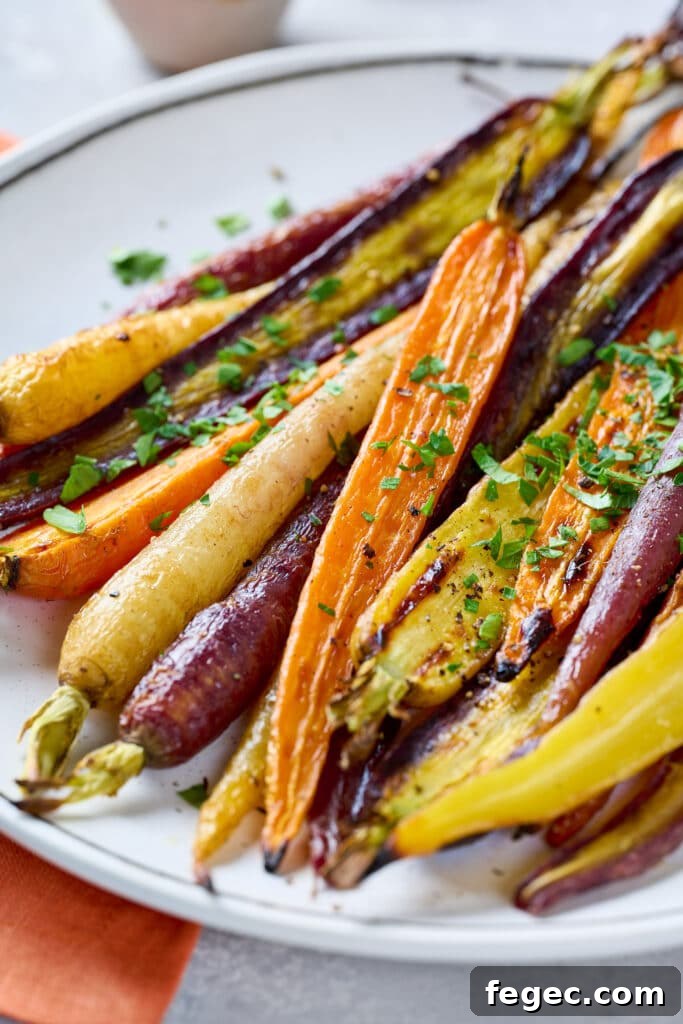
⭐️ Roasted Rainbow Carrots: recipe at a glance
-
Why this recipe works: High-heat roasting (425°F) caramelizes the carrots’ natural sugars and the oil encourages even browning. The technique yields a flavorful, vibrant side without complicated ingredients.
-
Flavor profile: Sweet, earthy, lightly caramelized.
-
Simple and budget-friendly: Four core ingredients and one pan make this an easy, economical recipe.
-
Occasions: Serves as a versatile side for weeknights and special meals like Easter or Thanksgiving.
-
Dietary: Vegetable-based, vegan, gluten-free, dairy-free, nut-free, egg-free.
✔️ Ingredients, Substitutions & Swaps
-
Rainbow carrots: Naturally sweet and colorful. Regular orange carrots work just as well, and you can substitute similar root vegetables such as parsnips if desired.
-
Olive oil: Promotes browning and crisp edges. Avocado oil or another high-smoke-point oil can be used as an alternative.
-
Salt & black pepper: Simple seasoning to highlight the carrots’ flavor.
-
Fresh herbs (optional): Chopped parsley, tarragon, dill, or mint add bright, fresh notes at the end.
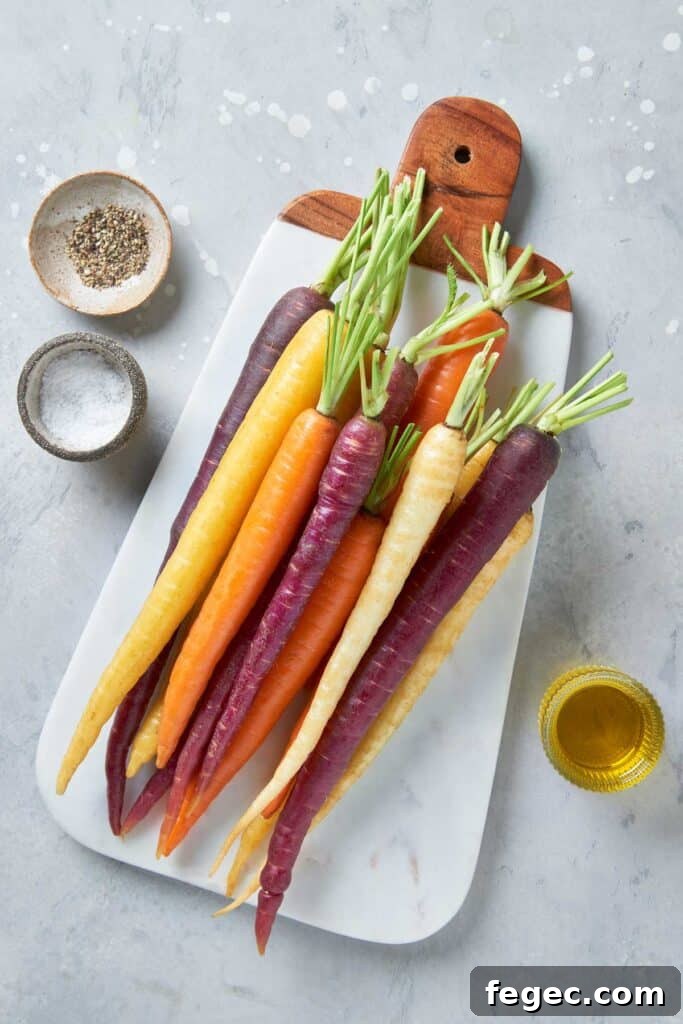
🔎 How to Make Roasted Rainbow Carrots
-
Preheat the oven to 425°F (220°C). Line a rimmed baking sheet with parchment paper or foil for easy cleanup.
-
Trim the tops and scrub the carrots well. Peeling is optional—keeping the peel preserves texture and nutrients.
-
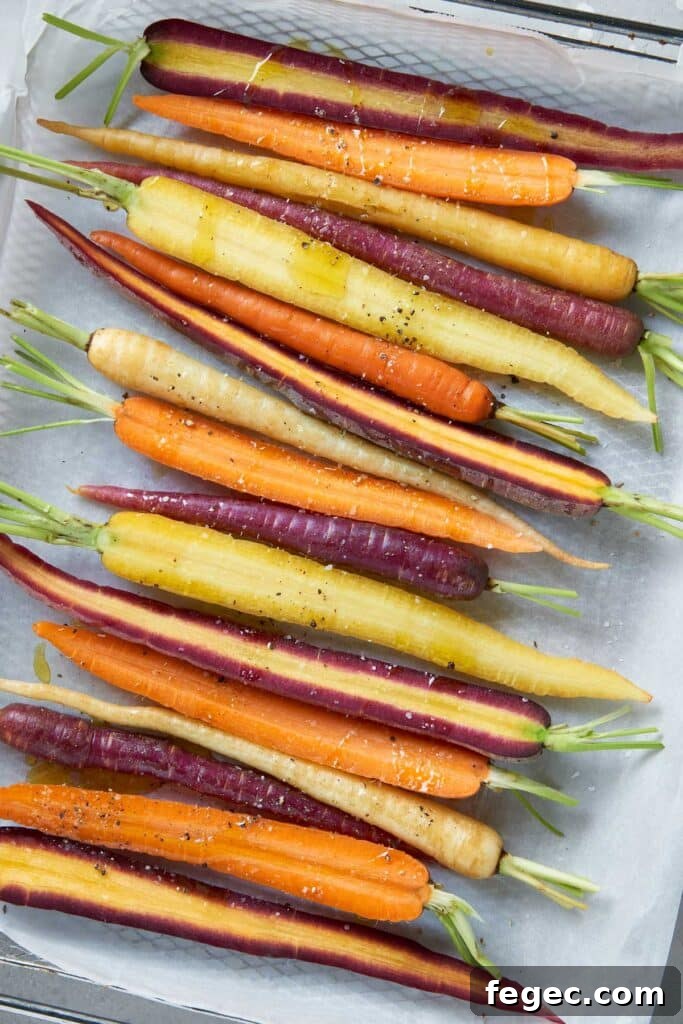
Arrange the carrots on the sheet, drizzle with olive oil, season with salt and pepper, and toss to coat evenly. Spread them in a single layer so they roast, not steam.
-
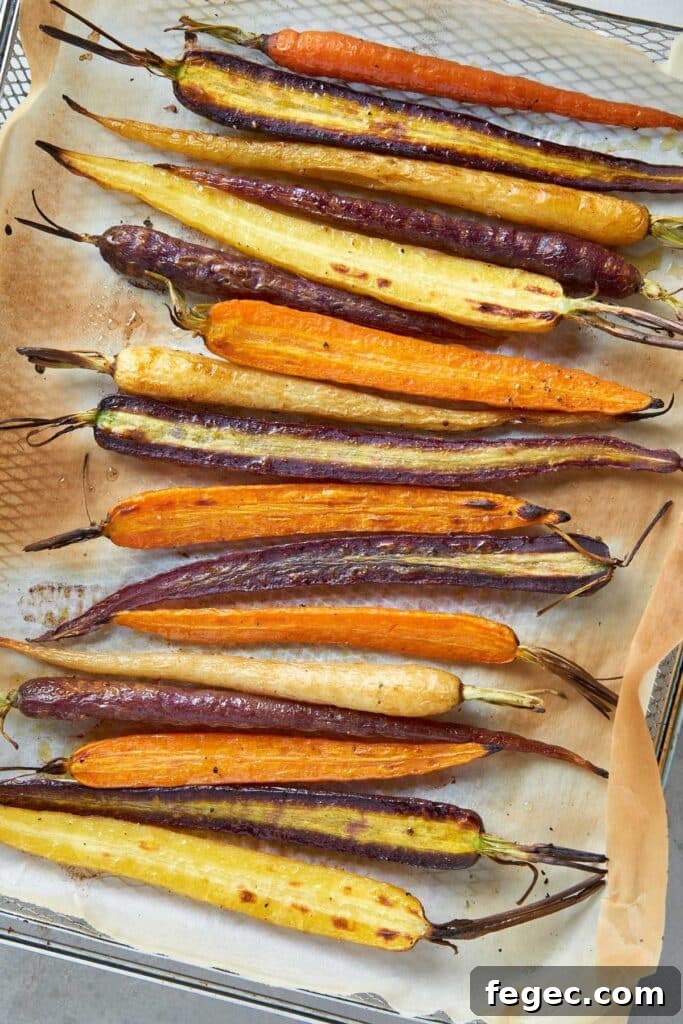
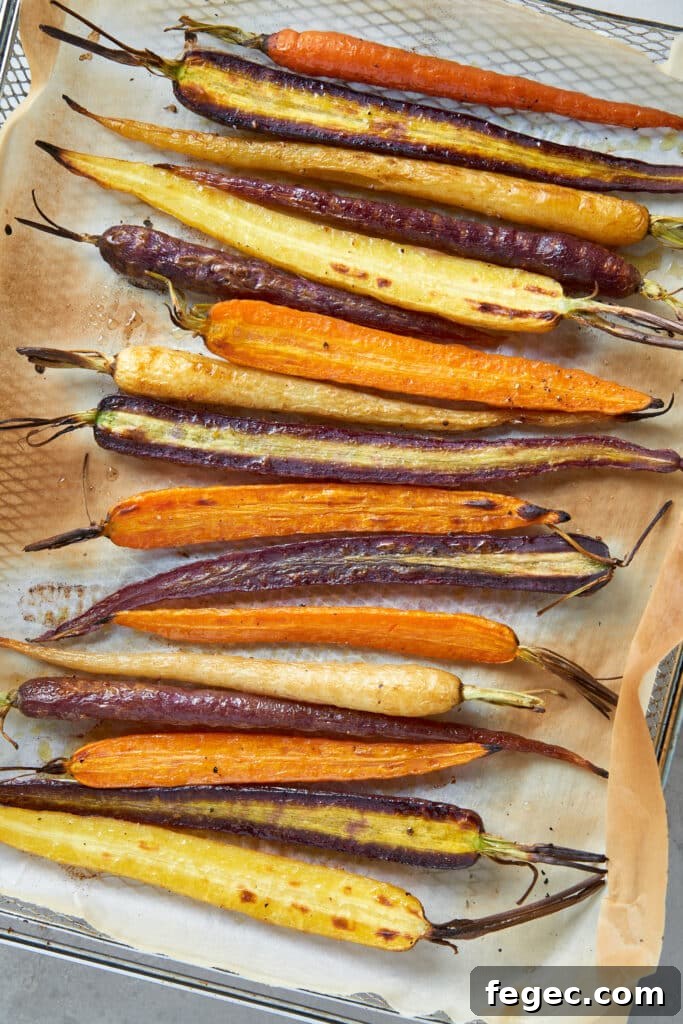
Roast for 20–35 minutes, depending on thickness. Start checking at 20 minutes by piercing the thickest part with a fork; they’re ready when the fork slides in easily. Finish with chopped herbs if you like and serve warm.
🔎 Flavor Variations Worth Trying
-
Use coconut oil instead of olive oil for a subtly sweeter finish.
-
Add spices such as garlic powder, turmeric, smoked paprika, or cumin for warmth and complexity.
-
Sprinkle grated Parmesan over the carrots about 10 minutes before they finish roasting for a savory crust.
-
Drizzle with maple syrup, honey, or a reduction of balsamic vinegar for an added sweet-tangy glaze.
-
Finish with citrus zest (orange or lemon) after roasting to brighten the flavors.
💡 Recipe Tips: Prep & Adjustments
-
Even cooking: Halve very thick carrots lengthwise so all pieces finish at the same time.
-
For caramelized edges: Do not overcrowd the pan. Crowding traps steam and prevents browning.
-
Check early: Thin carrots will be done sooner; begin checking at 20 minutes to avoid overcooking.
-
Why roasting works: High heat breaks down cell walls and concentrates sugars, naturally enhancing the vegetable’s sweetness and depth.
-
Roasting times vary: Freshly harvested, tender carrots roast faster than older, denser roots—adjust timing as needed.
🤔 Frequently Asked Questions
How long should I roast carrots?
Roast at 425°F (220°C) for 20–35 minutes depending on thickness. Start checking at 20 minutes; they’re done when a fork slides in easily.
Do I need to peel carrots before roasting?
Peeling is optional. A good scrub removes dirt while keeping the skin preserves nutrients and texture.
Why aren’t my carrots browning?
They may be overcrowded on the pan or the oven temperature could be too low. Give them space and roast at a high temperature for proper browning.
🔎 Making Ahead, Storing and Reheating
-
You can trim and scrub the carrots a day ahead, then toss with oil and seasoning right before roasting.
-
Store leftovers in an airtight container in the refrigerator for 2–3 days.
-
Reheat gently in a 325°F oven until warmed through or use the microwave for convenience. If reheating in the oven, tent with foil if they start to darken too much.
💛 Conscious Bites
Small choices add up. Choosing vegetables that store well can reduce food waste, and simple, affordable recipes help keep meals both satisfying and sustainable.
Environment: Carrots are relatively low-impact and store well, which helps minimize waste compared with more perishable produce.
Finances: This side dish is economical—simple ingredients deliver big flavor without stretching your budget.
Health: Carrots provide beta-carotene (a precursor to vitamin A), fiber, and antioxidants. Roasting with a little olive oil can enhance nutrient absorption and make a nutritious, tasty side.
🧂 Essentials you’ll adore for this recipe
-

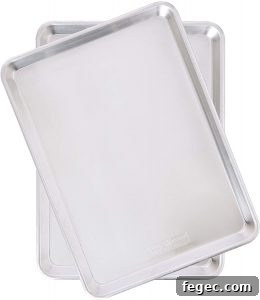
Baking Sheet Pans (Half sheet)
A sturdy half-sheet pan is the workhorse for roasting vegetables. Choose a well-made pan for even heat and long-lasting use.
-
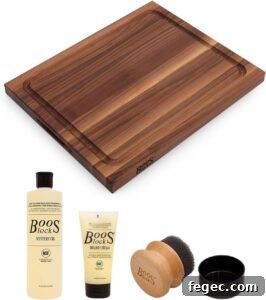
John Boos Rectangular Cutting Board
A quality cutting board speeds prep and lasts for years when cared for properly.
-
Chef’s Knife
A sharp, well-balanced chef’s knife makes prep faster, safer, and more pleasant. It’s one of the best kitchen investments you can make.

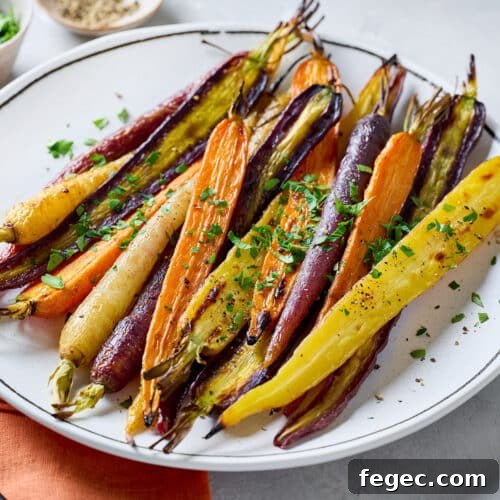
Roasted Rainbow Carrots
 Kathy McDaniel
Ingredients
- 2 pounds rainbow carrots (about 2 bunches)
- 2–3 tablespoons olive oil, plus more if needed
- Sea salt or Kosher salt
- Ground black pepper
Garnish (optional)
- Chopped parsley, tarragon, dill, or mint
Instructions
-
Preheat the oven to 425°F. Line a rimmed baking sheet with parchment or foil.
-
Trim the carrot tops and scrub the roots well. You may leave the skins on; pat the carrots dry to encourage better caramelization.
-
Place carrots on the baking sheet, drizzle with olive oil, and season with salt and pepper. Toss with your hands to coat evenly.
-
Arrange in a single layer and roast until tender and lightly browned—about 20 to 35 minutes depending on size. Remove from the oven, sprinkle with fresh herbs if using, and serve.
Notes
- For even cooking: Cut very thick carrots in half lengthwise so pieces finish uniformly.
- For caramelization: Pat carrots dry and use a bit of oil; the oil helps develop golden edges.
- Doneness: A fork should slide into the thickest part with little resistance when carrots are ready.
- Timing: Because carrots vary in thickness, check after 20 minutes and then every 5 minutes until done.
Nutrition
Carbohydrates: 14 g,
Protein: 1 g,
Fat: 3 g,
Fiber: 4 g,
Vitamin A: 25259 IU