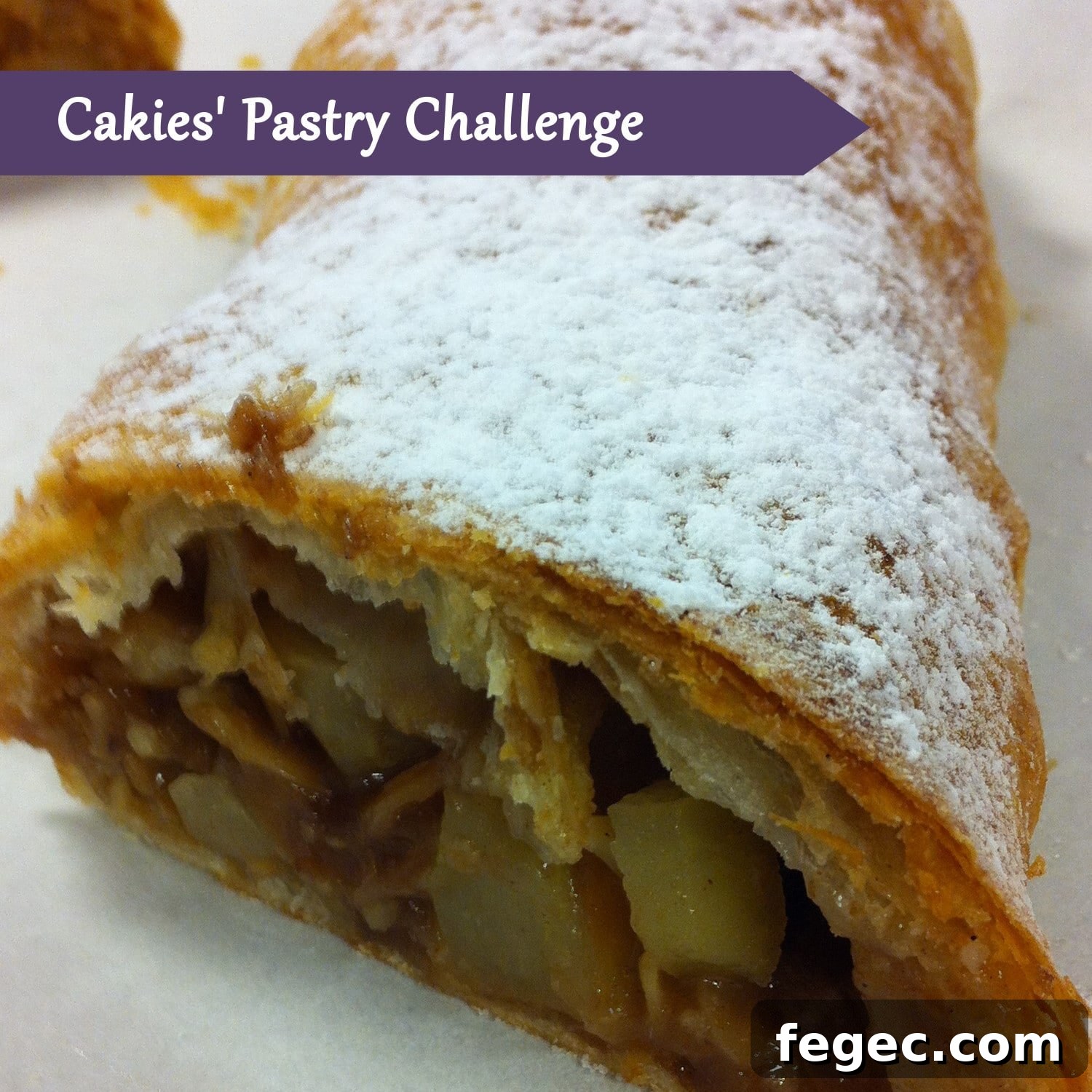
That day was all about apples: we prepared an apfelstrudel and an elegant apple dessert. Both recipes were enjoyable to make and taught me a lot about pastry techniques.
We began by making the strudel dough. Because the dough needs time to relax before stretching, we prepared it first and set it aside to rest while we worked on the other components.
While the dough rested, we assembled the filling for the strudel and started on the individual apple desserts.
The apple desserts had a crisp base dough, a small dollop of cream, and a topping of apples glazed in an apricot jelly. We baked the bases with the cream first, then added the apple topping and placed the desserts in the freezer to set. Freezing helped the elements firm up so the desserts would hold their shape for glazing and finishing.
With the apple desserts chilling, we returned to the strudel. Two large workbenches were joined and covered with a well-floured cloth. We dusted the dough with flour as well to prevent sticking, then began rolling it out. After rolling the dough partially, we moved to a gentle stretching technique that thins the pastry without tearing it. The goal is a very fine, almost translucent sheet of dough. We stretched it until it nearly covered both workbenches — a satisfying sight and a good sign that the dough was ready.
Once the dough was as thin as possible, we spread the apple filling along one edge. Using the cloth, we lifted and folded a portion of the dough over the filling, then continued rolling so the filling became encased in successive, thin layers of pastry. When the roll reached the desired thickness, we trimmed the excess dough and slid the strudel into the oven. Making the strudel was rewarding but demanding; stretching the dough requires patience and precision, and I learned a lot from the process.
While the strudel baked, we finished the apple desserts. After removing them from the freezer, each portion held together nicely and was ready to be dipped in a clear jelly which adds an attractive shine. We topped each dessert with a slice of caramelized apple for flavor and presentation. The finished desserts were pleasing to the eye and delicious to taste.
The timing of this project was perfect for a current assignment: developing a dessert that balances tradition and innovation. The brief asks for either a modern interpretation of a classic or a classicized version of a contemporary dessert. I decided to give a modern twist to the traditional apple pie. I already have a clear idea for the filling, but I had been searching for the right base. After tasting the base dough used for these apple desserts, I realized it fits my concept perfectly, so I’ll use it for the experiment.
This work will continue as part of my course assignment. I still need to refine the concept and complete further tests before finalizing the recipe. More updates about the development will follow — to be continued.