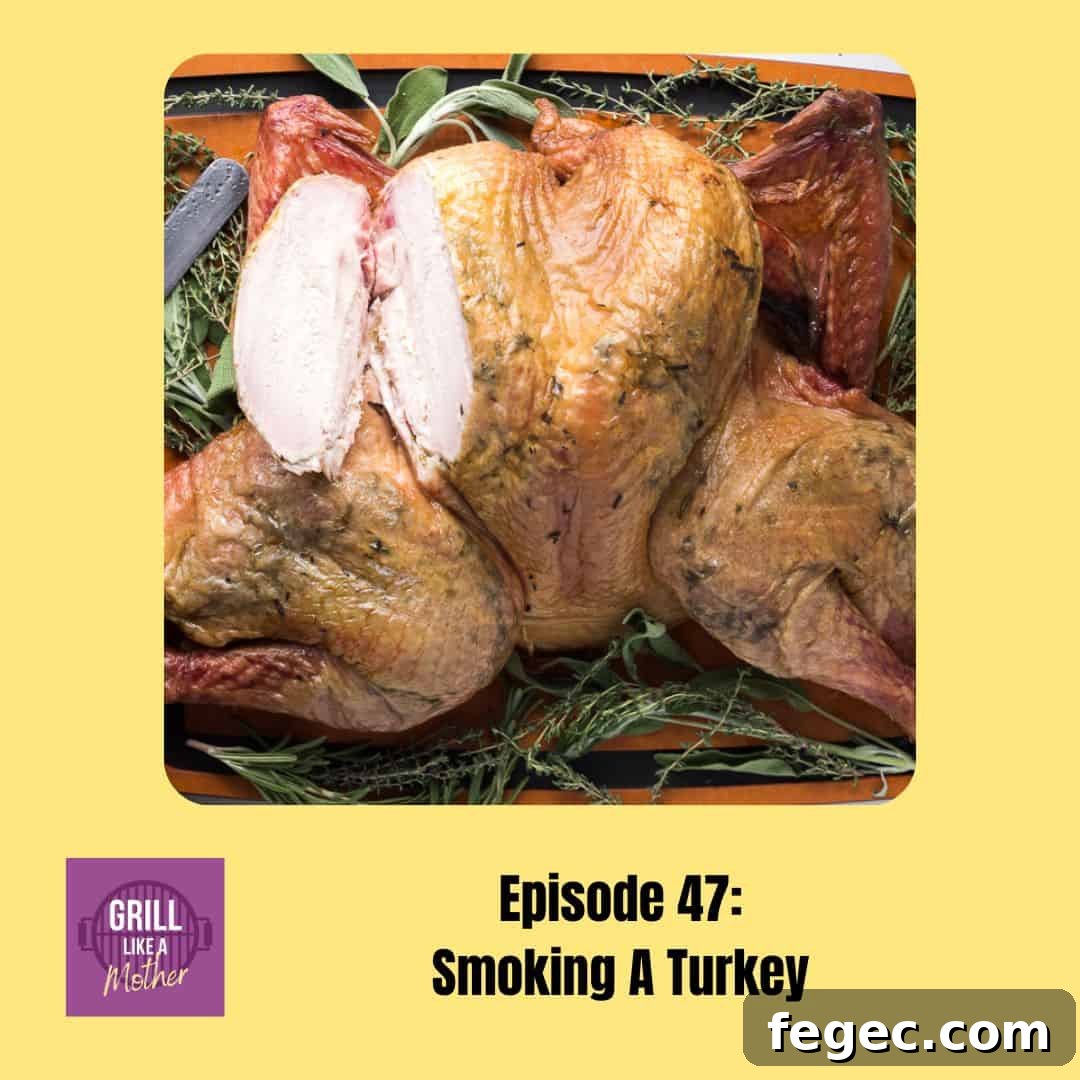
Episode 047 is the third installment in a short series dedicated to turkey. In this episode, Taryn walks you through smoking a turkey on a Traeger grill from start to finish and offers practical tips for great results — including how to handle leftovers. If you’ve been considering smoking your Thanksgiving or holiday bird, this episode explains why it’s worth trying and how to get the best flavor and texture.
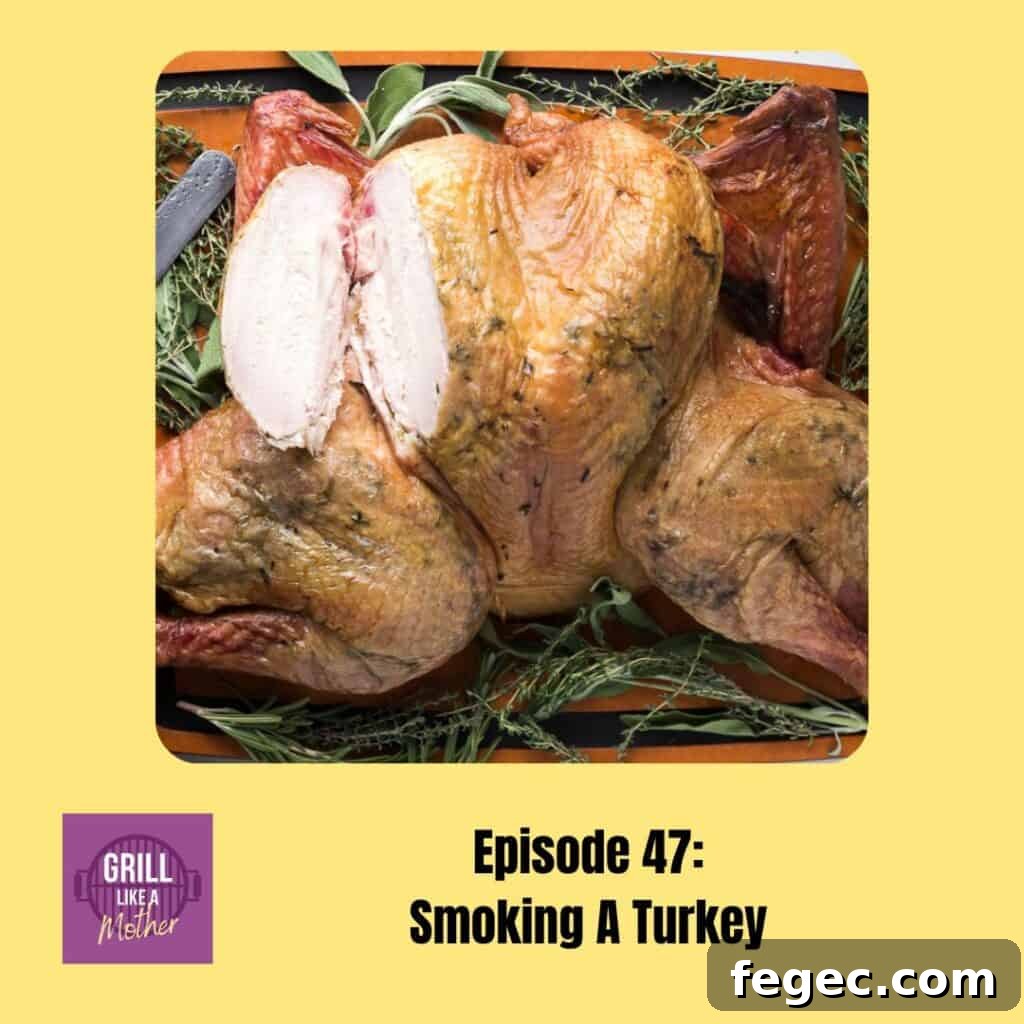
Listen on iTunes, Stitcher, TuneIn, or your favorite podcast player. Or scroll down to read the full transcript.
RECIPES MENTIONED
Recipes referenced during the episode, available on Hot Pan Kitchen:
- Traeger Smoked Turkey Recipe
- Sweet Potato Casserole
- Gluten Free Sausage Stuffing
RESOURCES MENTIONED
Some links may be affiliate links.
- Episode 45: Spatchcock A Turkey
- Episode 46: Dry Brine A Turkey
- Thermapen ONE Meat Thermometer
- What to serve with smoked turkey
- Rimmed sheet pan
- Wire rack
- Aluminum foil
- Large cutting board
- Carving knife
TRANSCRIPT
Taryn Solie: Hello grillers, and thanks for tuning in. I’m Taryn Solie, and today I’m sharing grilling inspiration focused on smoking a turkey. This episode is the third in a series. Previously I covered how to spatchcock a turkey (episode 45) and how to dry brine a turkey (episode 46). In this episode I’ll explain how to smoke that prepared turkey on a Traeger, cover why smoking is a great option for holidays, and share tips to help you get juicy, flavorful results.
We love smoking turkey because the smoke adds delicious depth without tying up the oven — a big advantage when you need the oven for sides like sweet potato casserole or stuffing. If you have a wood pellet grill or smoker, smoking the turkey frees up oven space and gives a memorable flavor.
This episode continues from the prior two, so it assumes you’ve already spatchcocked and dry brined your turkey. For smoking you’ll need:
- A turkey — I usually use a bird around 14 pounds
- ½ cup butter, ghee, or another solid fat
- 1 large fresh rosemary stem
- 10–12 fresh sage leaves
- 3–4 stems of fresh thyme
Disposable gloves are optional if you prefer not to handle raw meat.
Before starting, a few key tips: take the turkey out of the refrigerator at least 30 minutes before it goes on the smoker so it comes closer to room temperature and cooks more evenly. Choose a mild or fruity smoking wood — apple or pecan work well for turkey. Hickory offers a stronger smoke; avoid overpowering woods like mesquite unless you intentionally want a very strong smoke flavor.
Temperature control is essential. Aim for an internal temperature of at least 150°F in the white meat (breasts) and around 165°F in the dark meat (thighs and legs). Use a reliable meat thermometer and check the temperature in multiple locations. Traeger grills often include a probe you can insert and monitor, and many cooks supplement that with an instant-read thermometer like the Thermapen for quick, accurate checks.
To smoke the turkey: remove it from the fridge 30 minutes before cooking. Preheat your pellet grill or smoker to 250°F and ensure the hopper has enough pellets. Soften the butter, finely chop the herb leaves, and combine them with the butter in a small bowl. Gently loosen the skin over the breast and rub a tablespoon-sized amount of herb butter directly onto the meat under the skin; repeat for both breasts and apply to the legs and thighs. Spread any remaining butter on the skin.
If you want drippings for gravy, place the turkey on a wire rack in a foil-lined rimmed sheet pan; otherwise you can cook it directly on the grill grates. Insert your temperature probe if using one, close the lid, and smoke. Check progress after about two hours. A spatchcocked bird often takes about 3.5–4 hours to reach target temperatures, but timing varies with weather and grill performance, so rely on internal temperature rather than time alone.
Once the turkey reaches the appropriate internal temperatures, remove it from the grill. If not using a sheet pan, transfer the bird to a large cutting board using tongs. Let it rest at least 10 minutes before carving; loosely tent with foil if you need to hold it longer to retain heat.
That’s the smoking process — your turkey should be flavorful, moist, and ready to carve. For step-by-step photos and the full written directions, see the Hot Pan Kitchen post linked in the show notes. I also have a post with side dish ideas and wine suggestions to pair with smoked turkey.
To find the show notes, visit HotPanKitchen.com and select Podcast from the menu, or follow the link in your podcast app. If you enjoyed this episode, please subscribe on your favorite podcast platform. In the next episode I’ll explain what to do with the turkey carcass — don’t toss those bones; we’ll turn them into something delicious.
Thanks for listening, and until next time, keep grilling like a mother.