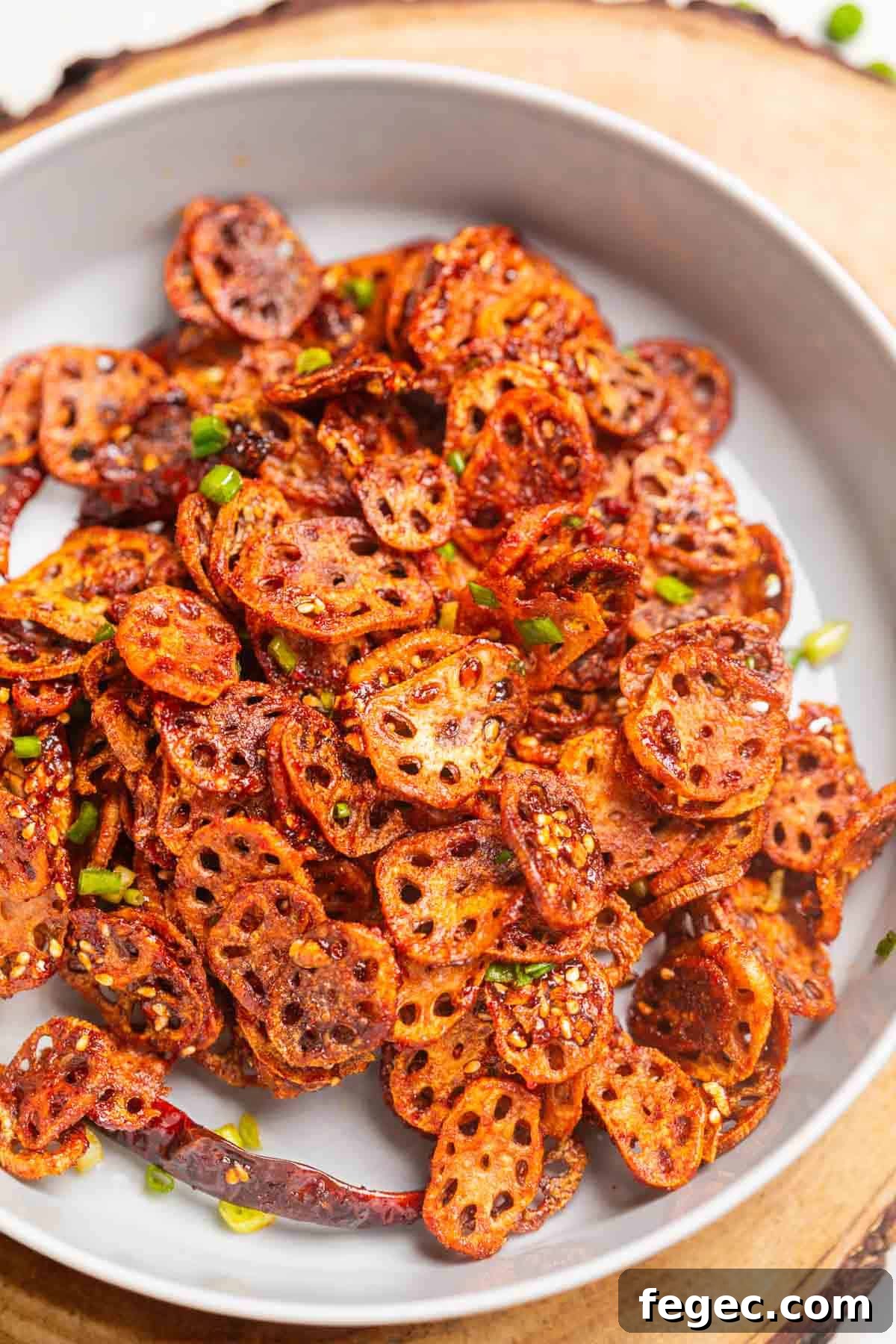
Crispy, sticky and just the right amount of spicy — this Korean-style crispy lotus stem delivers an addictive crunch, coated in a glossy gochujang glaze that makes it hard to stop at just one piece.
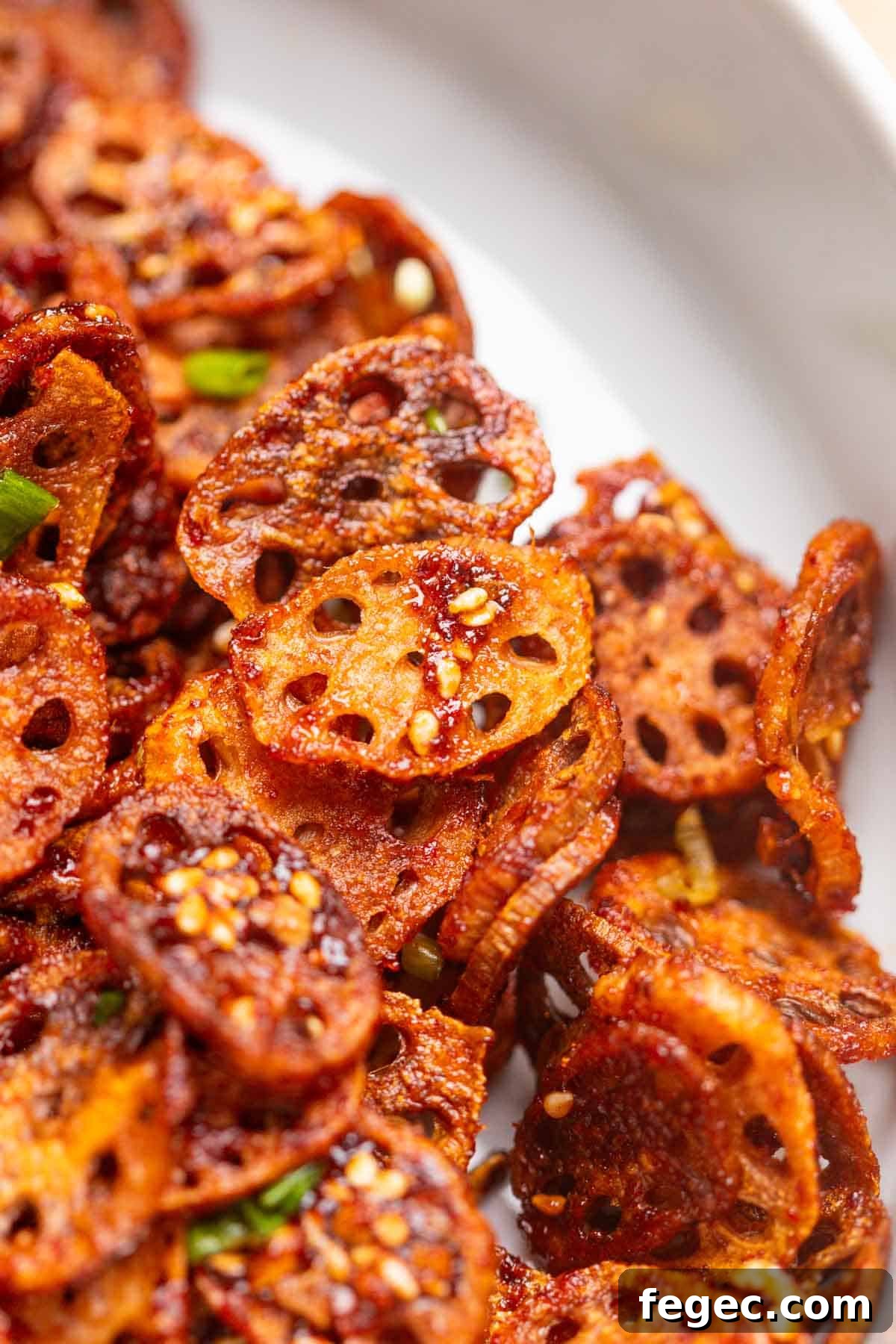
Lotus stem, often called lotus root, may not be a regular in your kitchen — but this recipe could change that. Each bite combines crunch, heat and a shiny red glaze for a flavourful snack or starter. The heat is balanced with a hint of sweetness and deep umami, creating a multi-layered taste experience that keeps you reaching for more.
If you want a surprising addition to your Diwali spread or party platter, Korean-style crispy lotus stem is a winner. Serve it on a charcuterie or snack board, or present it simply with mayonnaise or a garlicky yogurt dip for an appetizer that steals the show.
Jump to section: Korean Crispy Lotus Stem
- Ingredients for Crispy Lotus Stem
- Richa’s Top Tips
- Frequently Asked Questions
- Storage Tips
- Serving Ideas
- Customisation Ideas
- Did You Know?
- Watch Korean Crispy Lotus Stem Recipe Video
Ingredients for Crispy Lotus Stem
- Lotus stem: The star ingredient. Slice very thinly so slices crisp up evenly. Fresh or frozen lotus stem is available at many Asian stores.
- Oil: A neutral oil such as sunflower or canola for air-frying and stir-frying.
- Aromatics: Finely chopped ginger and garlic for aroma and depth.
- Sauce base: Sesame seeds, gochujang (Korean chilli paste), gochugaru (Korean chilli flakes), soy sauce and oyster sauce provide heat and umami.
- Sweetness and balance: A spoonful of honey and a little water create a glossy, sticky coating that balances the spice.
- Garnish: Finely chopped spring onion greens for freshness and a final crunch.
Richa’s Top Tips
- Slice evenly: Thin, uniform slices crisp up best. Thick slices stay chewy.
- Dry thoroughly: After rinsing, pat slices completely dry so they don’t steam in the air fryer — this helps achieve maximum crispness.
- Don’t overcrowd: Arrange slices in a single layer or with space between them to allow hot air to circulate.
- Adjust the sauce: Taste the sauce before adding all the chilli paste or flakes; tweak spicy and sweet elements to suit your palate.
- Toss just before serving: Coat the lotus stems only when you’re ready to eat so they remain crisp and don’t turn soggy.
Frequently Asked Questions
Lotus stem, or lotus root, is the edible part of the lotus plant. It has a mild, slightly sweet flavor and a crisp, slightly starchy texture that stays pleasantly crunchy after cooking.
It is mildly sweet with a crunch reminiscent of water chestnuts or bamboo shoots. When fried or stir-fried it develops a subtle nutty note.
Chewiness usually means the slices were too thick or not cooked long enough. Aim for very thin, dry slices and give them enough time in the air fryer to crisp.
Yes. Substitute a red chilli paste mixed with soy sauce, a splash of vinegar and a pinch of sugar to mimic the spicy-sweet, savory profile. It won’t be identical but will still be delicious.
Storage Tips
- Fridge: Store leftovers in an airtight container for up to 2 days. The stems may soften slightly but remain tasty.
- Freezer: Not recommended — the texture and sauce don’t hold up well when frozen and thawed.
- Reheating: Reheat in an air fryer or hot pan for a few minutes to recover some crispness. Avoid the microwave, which makes them soggy.
- Make ahead: Air-fry the lotus slices in advance and keep them separate from the sauce. Toss in the glaze just before serving to preserve crunch.
Serving Ideas
These crunchy lotus stems are excellent on their own, and even better when paired with complementary dishes. Try:
- With vegetable hakka noodles — the sticky, spicy glaze pairs well with wok-tossed noodles.
- With veg fried rice — mild, savoury fried rice balances the bold lotus stem flavours.
- With chilli garlic noodles — for those who love extra heat.
- With veg spring rolls — include these on an appetizer platter for variety.
- With jeera rice — a simple, aromatic side to mellow the Korean-inspired spice.
- With bibim guksu — for a full Korean-inspired meal with layered flavours.
- With mango sago — finish with a cooling, sweet dessert to contrast the spice.
- With Indian breads — pair with flatbreads for a festive snack spread.
Customisation Ideas
- Add peanuts: Toss in roasted peanuts at the end for extra crunch and a nutty edge.
- Make it milder: Reduce gochugaru or use Kashmiri chilli powder for color with gentler heat.
- Finish with sesame oil: A small drizzle at the end deepens the nutty aroma and adds shine.
- Fusion twist: Swap gochujang for schezwan sauce for an Indo-Chinese variation.
- Use other vegetables: If lotus stem is hard to find, try baby corn, mushrooms or cauliflower florets for a similar crispy bite.
Did You Know?
Lotus stems feature a natural honeycomb of air channels that let the plant breathe underwater; those same pockets are why the stem stays crisp when cooked. Chefs across Asia prize lotus stem for its texture, and it has also been used in traditional medicine for its cooling properties and digestive benefits.
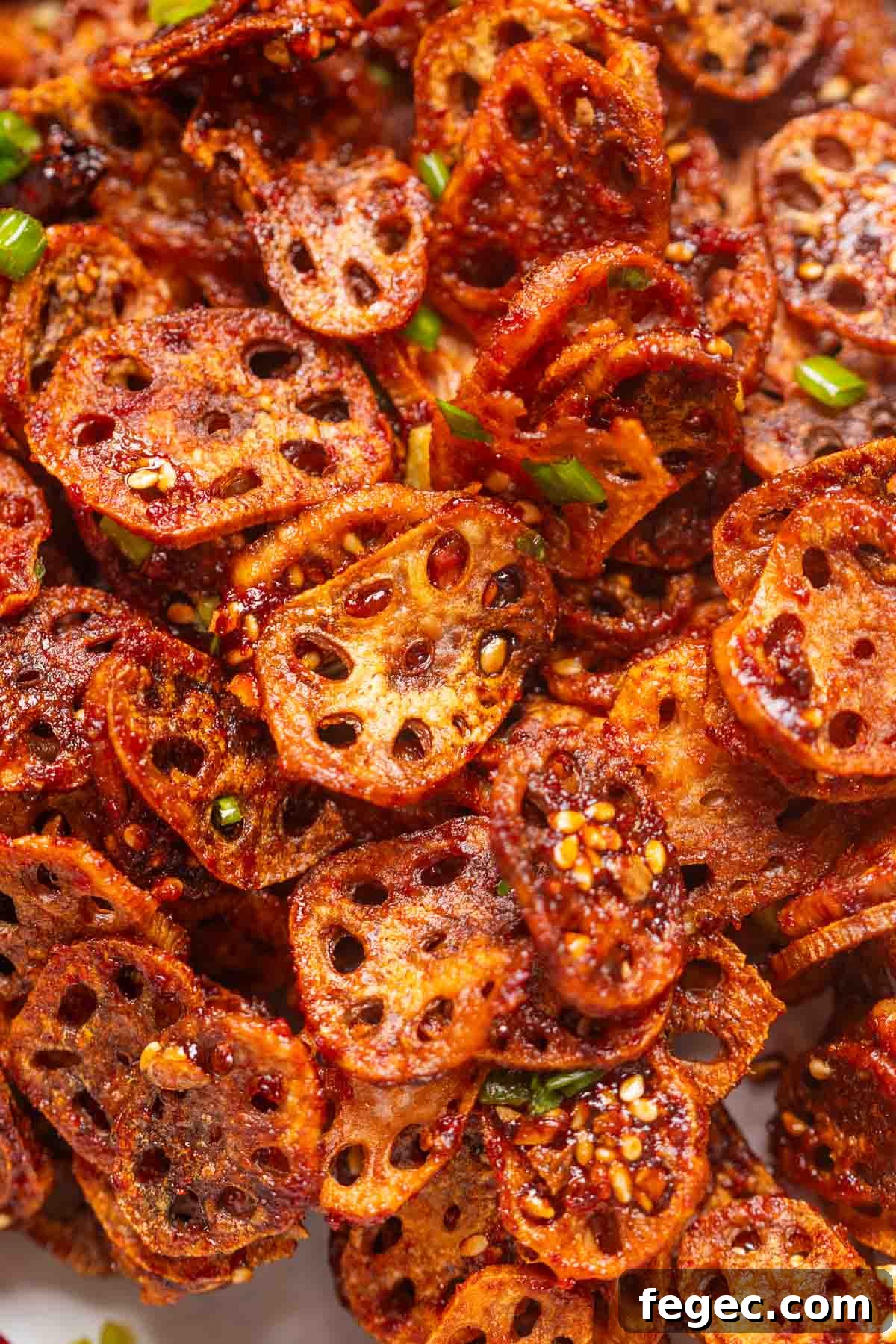
Give this Korean-style crispy lotus stem a try at home. If you make it, tag @my_foodstory on Instagram so I can see your creations!
Watch Korean Crispy Lotus Stem Recipe Video

Korean Crispy Lotus Stem
Equipment
-
1 Air Fryer
Ingredients
- 275 gms lotus stems, approx. 3 cups, sliced very thin
- 2 teaspoons cooking oil
For stir fry
- 1 tablespoon sunflower or neutral oil
- 1 teaspoon finely chopped ginger
- 1 teaspoon finely chopped garlic
- 1 teaspoon sesame seeds
- 2 ½ teaspoons gochujang
- 1 teaspoon gochugaru
- ¾ teaspoon soy sauce
- 1 ¼ teaspoons oyster sauce
- 1 tablespoon honey
- 2 tablespoons water
- 1 tablespoon finely chopped spring onion greens
Instructions
Air frying lotus stems
- Wash and soak the lotus stem slices for 5 minutes to remove any soil. Drain and pat completely dry on a kitchen cloth.
- Preheat the air fryer to 170°C and brush the basket with oil.
- Toss the dry lotus slices with the oil in a wide bowl so they’re evenly coated.
- Place the slices in the air fryer basket without piling them up; overlapping will prevent even frying.
- Air fry for about 16 minutes at 170°C, brushing with a little oil every 6 minutes.
Sauce
- Combine sesame seeds, gochujang, gochugaru, soy sauce, oyster sauce, honey and water in a bowl and mix well.
Stir fry
- Heat oil in a pan, add ginger and garlic and sauté briefly on high heat until fragrant.
- Add the prepared sauce and cook for 2 minutes until it thickens slightly.
- Add the air-fried lotus stems and toss for 2 minutes to coat evenly with the sauce.
- Garnish with spring onion greens and serve immediately.
Video
Nutrition
This article was researched and written by Harita Odedra.