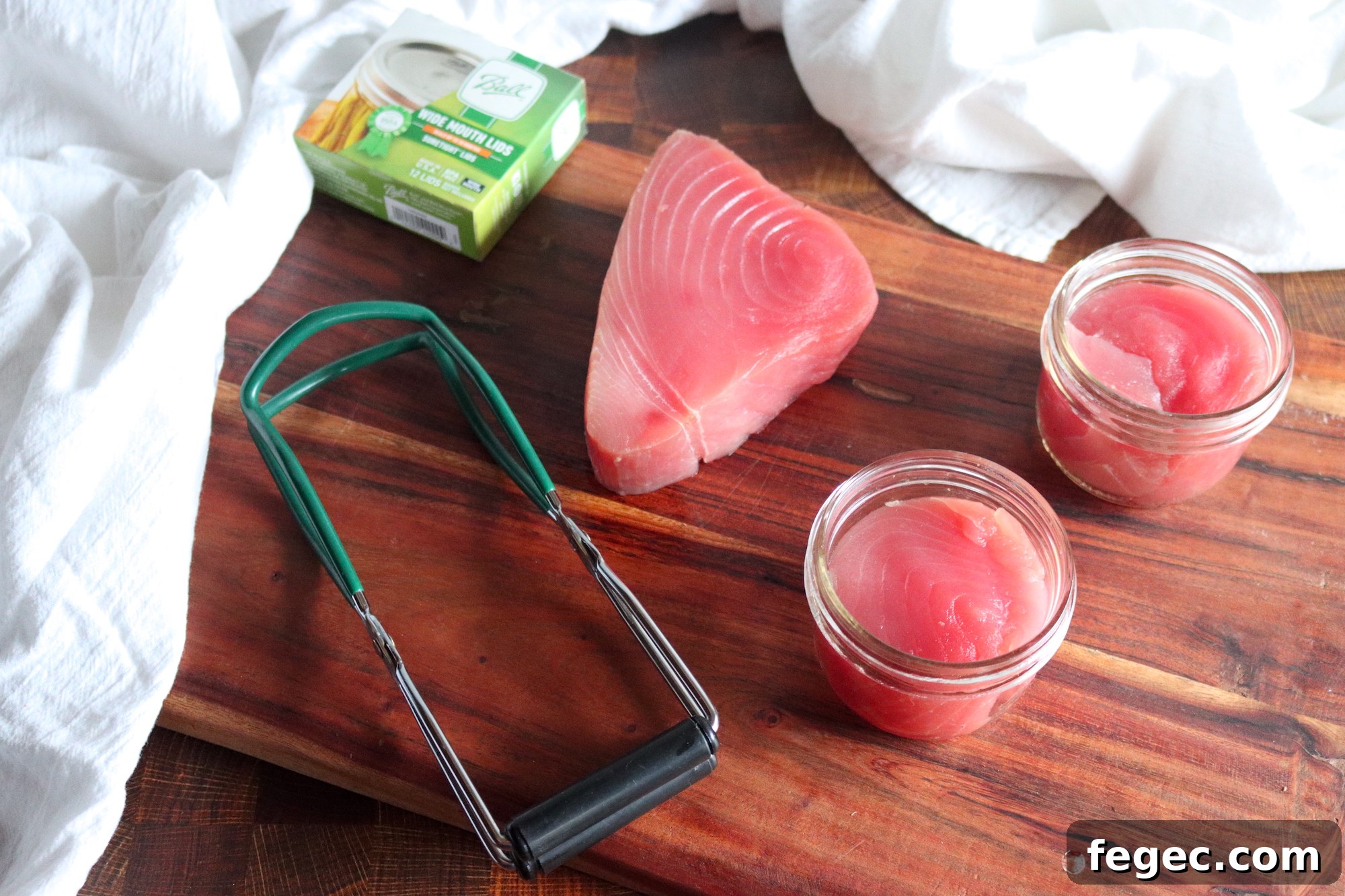
Canning tuna at home in a pressure canner is an excellent way to preserve your catch. Whether you fish for your own food or simply want full control over ingredients, this straightforward method yields flavorful, additive-free canned tuna you can store on your pantry shelf.
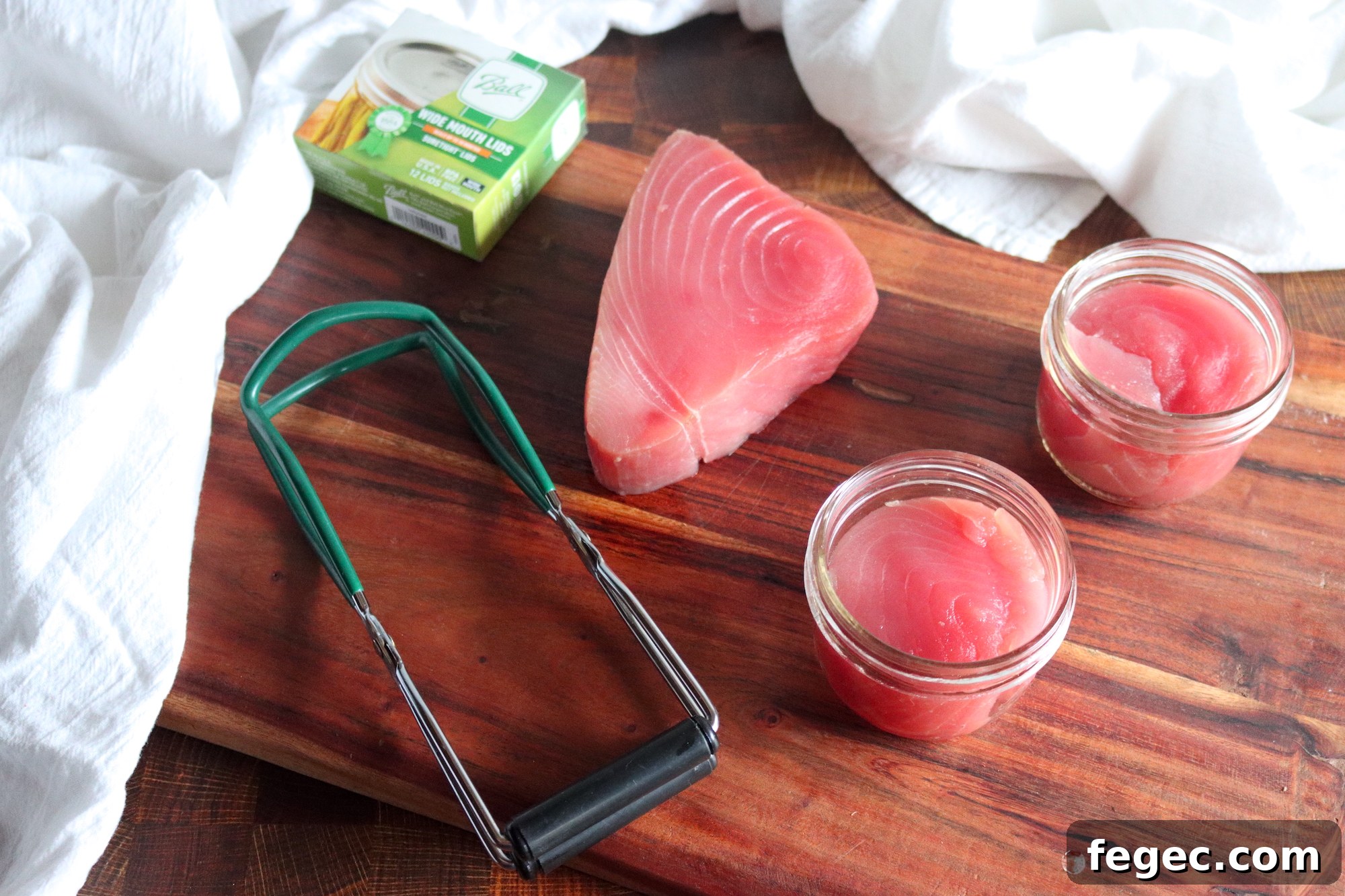
You probably enjoy a tuna sandwich, but have you considered canning your own fresh tuna instead of buying commercial cans? Home canning lets you preserve high-quality fish, avoid unwanted additives, and enjoy fresher flavor than most factory-packed products.
This guide explains how to prepare and pressure-can tuna safely and effectively, covering ingredient choices, preparation, packing options (raw pack and precooked/hot pack), processing times, and altitude adjustments.
Ingredients for Canning Tuna
The ingredients are minimal. For a standard batch (six pints) you simply need:
- Raw, fresh tuna (freshly caught and kept on ice when possible)
- Salt (optional)
Jar sizes can be pints, half-pints, or quarter-pints. Estimate about 1 pound of tuna per pint jar or ½ pound per half-pint. Quantities should be adjusted to the number and size of jars you plan to fill.
This recipe focuses on a raw pack (raw-packed) method to preserve the best natural oils and texture. There is also a hot pack / precooked option, which can reduce strong flavors from lower-grade or darker meat but often yields a lower-quality final product and usually requires adding oil or water to the jars.
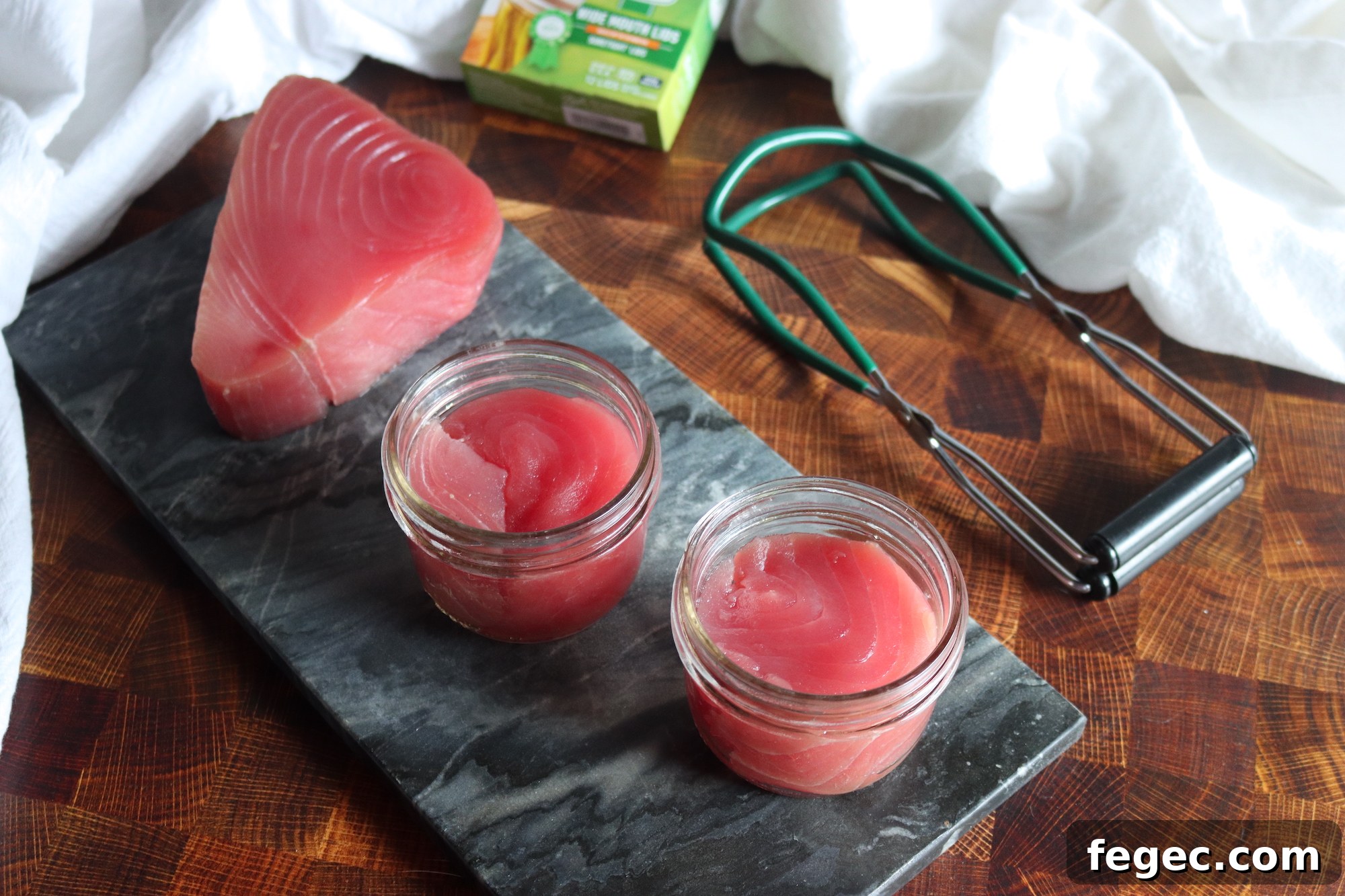
Canning Tuna
Both raw pack and precooked (hot pack) methods are used for tuna. Choose raw pack for the best flavor if you have high-quality fillets; choose precooking when dealing with strong-tasting or lower grade cuts.
To start, partially freeze the fish for 30–60 minutes—this firms the flesh and makes filleting and cutting easier. Remove skin with a sharp knife and scrape away any discolored meat, bloodline, or dark muscle (this portion can taste bitter and is best saved for pet food). Remove all bones and fin bases.
Precooking Tuna for Canning
Precooking reduces stronger fish oils and can improve flavor for lower-grade cuts. It requires extra steps and the loss of natural oils, which are often replaced with neutral oil or water in the jar.
Clean the fish, remove viscera, and rinse in cold water. Drain the cavity to remove blood. Place the fish on a rack or tray in a baking pan and bake at 225–250°F for 2–4 hours (depending on size), or bake at 350°F for about 1 hour. You may also steam for 2–4 hours. Ensure the internal temperature reaches 165–175°F for safety. Chill overnight to firm the meat before packing.
Preparing Raw Tuna for Canning
For raw pack canning (recommended for high-quality tuna), cut the cleaned fillets into pieces sized to fit your jars. Trim away dark meat and ensure no bones or skin remain. Cut pieces so they can be tightly packed into jars.
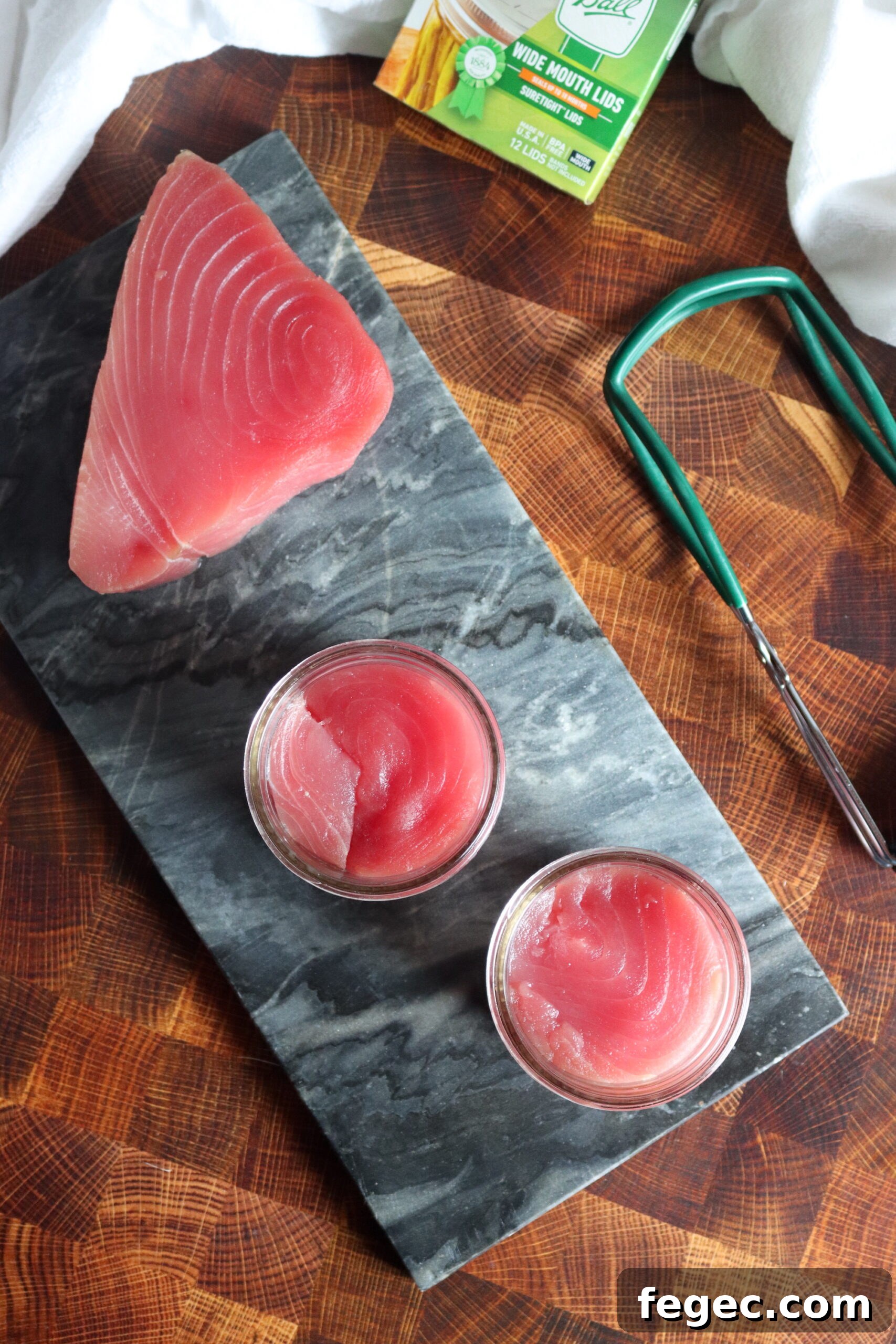
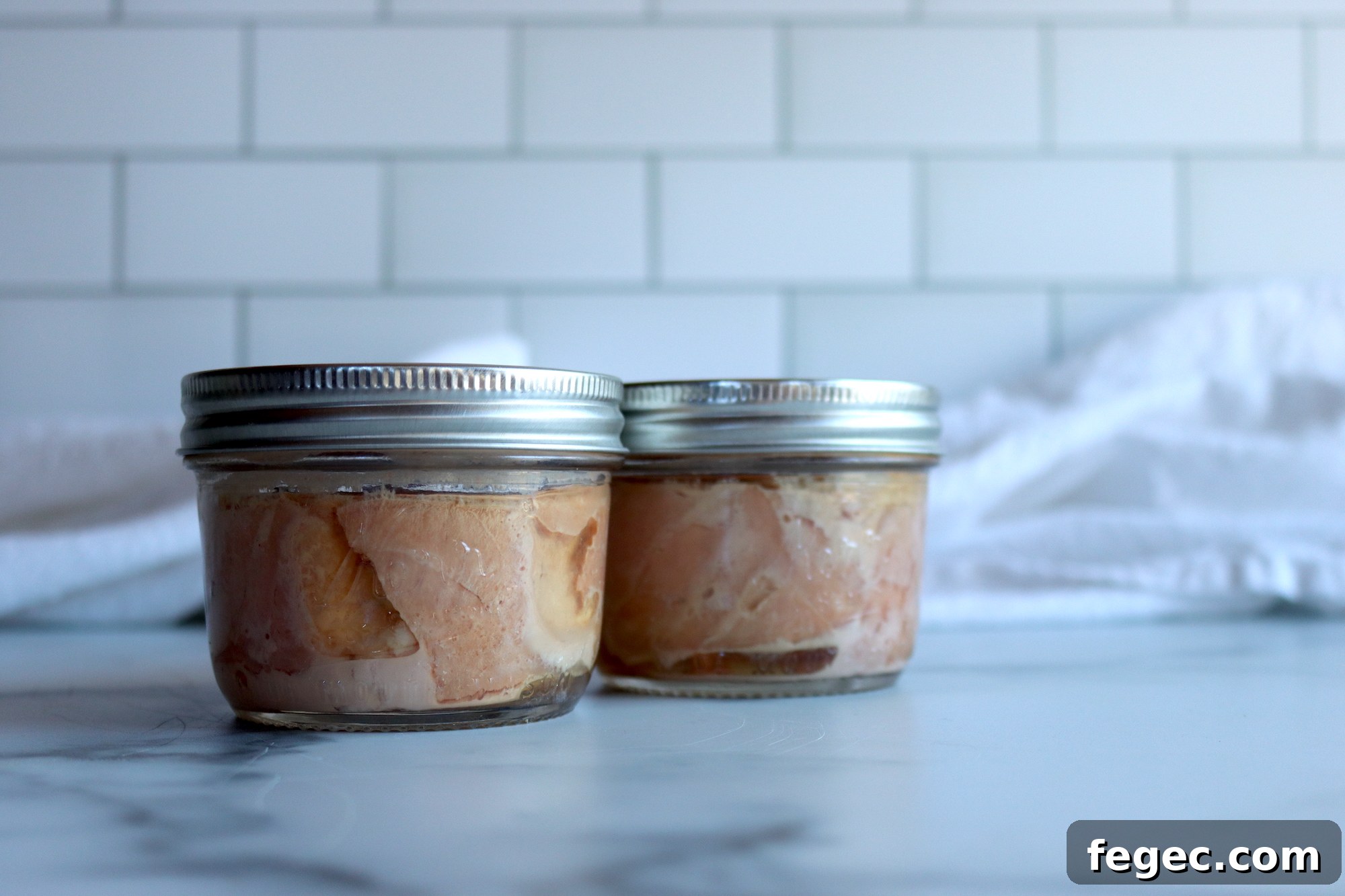
Canning Tuna at Home
Pack pieces into clean jars, leaving 1 inch headspace. For raw pack, do not add water or oil; salt is optional (½ tsp per half-pint, 1 tsp per pint). For precooked/hot-pack jars, add 1–3 tbsp oil to half-pints (2–6 tbsp to pints) or use water instead, plus the same optional salt amounts.
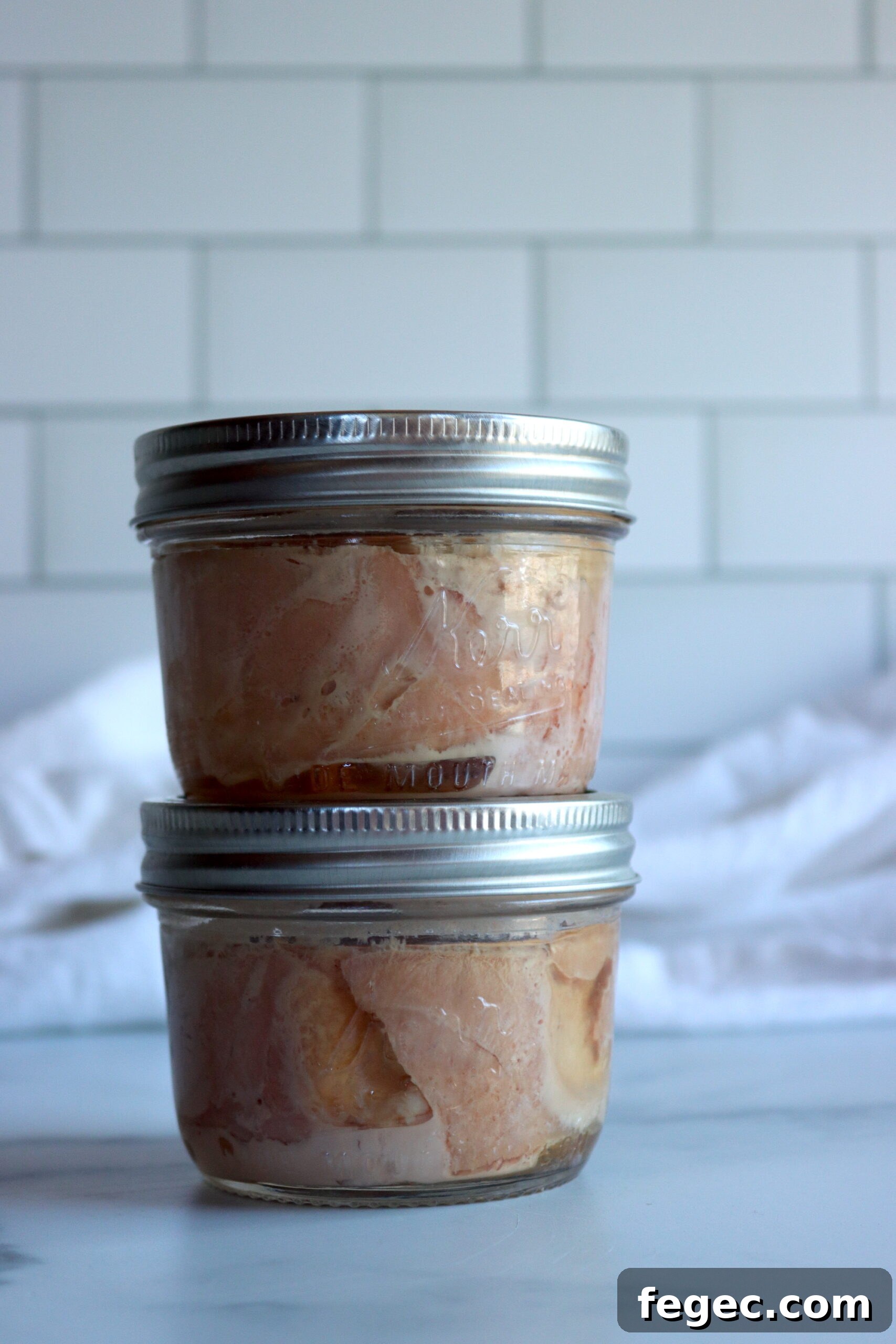
Wipe jar rims clean, apply lids and bands fingertip-tight. Place jars in a preheated pressure canner with warm water (around 140°F). Process both pints and half-pints for 100 minutes at the correct pressure for your altitude and gauge type.
After processing, allow the canner to depressurize naturally. When pressure reaches zero, remove the lid carefully, lift out jars, and let them cool undisturbed for 24 hours. Check seals, label jars, and store in a cool, dark place.
Altitude Adjustments for Canning Tuna
Processing time stays the same at higher altitudes, but required pressure increases. Use the pressure appropriate for your canner type:
Dial gauge pressure canners:
- 0–2,000 ft — 11 lb pressure
- 2,001–4,000 ft — 12 lb pressure
- 4,001–6,000 ft — 13 lb pressure
- 6,001–8,000 ft — 14 lb pressure
Weighted gauge pressure canners:
- 0–1,000 ft — 10 lb pressure
- Above 1,000 ft — 15 lb pressure
Serving Canned Tuna
Home-canned tuna can be used anywhere you would use store-bought tuna and often tastes richer and fresher. Enjoy it straight from the jar or use it in:
- Tuna Salad: Mix with mayonnaise, celery, and onion for a classic salad.
- Tuna Sandwich: Serve on whole-grain bread with lettuce and tomato.
- Tuna Pasta: Toss with cooked pasta, olive oil, garlic, and cherry tomatoes for a quick meal.
Canning Tuna
Equipment
- Pressure canner
Ingredients
- Tuna — freshly caught, on ice if possible
- Neutral oil (vegetable, soy, cottonseed) or water — optional for hot pack
- Salt — optional
Instructions
- Prepare clean canning jars, lids, and a pressure canner.
- Partially freeze fillets for 30–60 minutes to make cutting easier. Skin and cut into chunks, removing dark meat and bones.
- Pack jars leaving 1 inch headspace. For raw pack, do not add liquid; add ½ tsp salt to half-pints or 1 tsp to pints if desired. For precooked pack, add oil or water according to jar size and optional salt.
- Wipe rims, apply lids, and screw bands fingertip-tight.
- Place jars in the preheated pressure canner with water around 140°F and process at pressure for 100 minutes (see altitude adjustments above).
- Let the canner depressurize naturally, remove the lid, and carefully lift out the jars.
- Cool undisturbed, check seals, label, and store in a cool dark place.
Notes
Yield: About 1 lb of tuna fillets per pint jar or ½ lb per half-pint. This guide describes a raw pack recipe for best quality; a hot pack option is available for lower-grade meat but tends to reduce final quality.
Altitude Adjustments
Adjust pressure, not processing time, for altitude. See the altitude pressure lists above for dial gauge and weighted gauge canners.
Nutrition
Nutrition information is an approximation.
Fish Canning Recipes
While tuna is a pantry favorite, many other fish and seafood can be preserved by pressure canning. Consider experimenting with different fish canning recipes to expand your home-preserved pantry.
With a pressure canner and quality fish, home-canned tuna becomes a reliable, flavorful staple that’s ready whenever you need it.