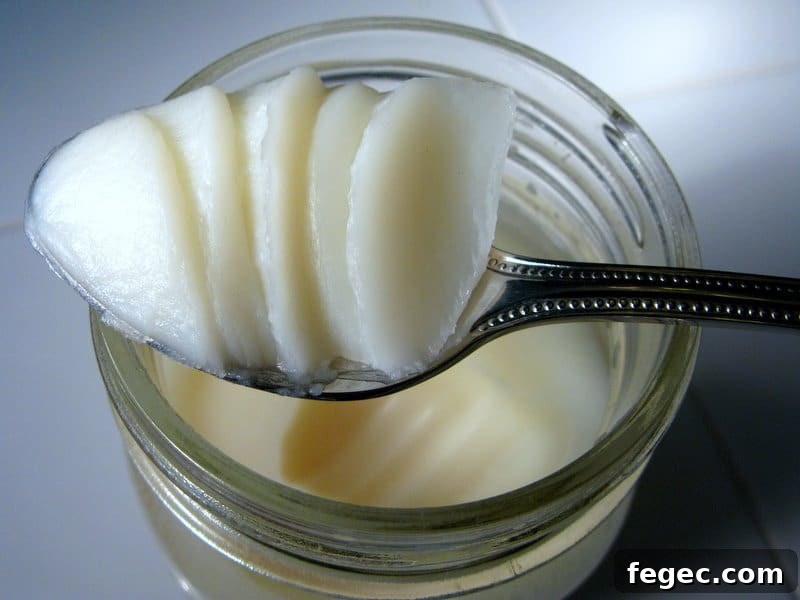
Move over coconut oil and olive oil — the latest trend in nutrition isn’t a plant oil at all but animal fats. Lard and tallow have become popular among people following primal and paleo-style diets and are often praised for various benefits. But are they truly healthy? Below is a clear, evidence-based look at lard and tallow and how a dietitian might view them.
Pin this image to save for later!
What is Lard?
Lard is pig fat, either in its raw form or rendered (melted and strained, similar to the fat that collects in a pan after frying). When sold in stores it is usually rendered and appears creamy and white with a consistency similar to butter. Nutritionally, lard is roughly 40% saturated fat, 50% monounsaturated fat, and 10% polyunsaturated fat. Most dietary guidelines advise limiting saturated fat and emphasizing monounsaturated and polyunsaturated fats—particularly omega-3s—for overall heart health, though recent research has prompted some re-evaluation of older assumptions.
image: Josh Larios via Flickr
What is Tallow?
Tallow is rendered fat from non-pork sources, most commonly beef. Beef tallow typically contains about 40% saturated fat, 45% monounsaturated fat, and 5% polyunsaturated fat.
Are Lard and Tallow Healthy?
Proponents of paleo and other ancestral diets often claim that saturated fat from whole-food animal sources is beneficial. Scientific evidence specific to lard and tallow in humans is limited, and animal studies show mixed results.
Some pig studies have suggested that marine or plant oils may produce more favorable blood lipid profiles than lard. For example, research in pigs found fish oil to be more effective than lard at lowering cholesterol, and another study reported lower serum saturated fat levels in pigs fed olive oil compared to those fed lard. These findings hint that certain plant or marine oils might be superior to lard for cholesterol management, at least in animal models.
Conversely, rat studies have produced different results: diets rich in beef tallow were associated with suppression of colon cancer and mammary tumors in experimental settings, possibly by enhancing the activity of conjugated linoleic acid (CLA), a fatty acid that has shown anticancer potential in animal studies. Another rat study suggested fewer symptoms of alcoholic liver disease with beef tallow than with corn oil, with lard showing intermediate effects.
Human research is sparse but informative. One study associated beef tallow consumption with higher beta-carotene levels compared to sunflower oil. Another investigation comparing various dietary fats found that lard and beef fat raised cholesterol, while corn oil lowered it. Overall, results vary depending on the model and outcome measured.
It’s worth noting that several meta-analyses have questioned the direct link between saturated fat and cardiovascular disease, while other analyses find that replacing saturated fats with polyunsaturated fats reduces cardiovascular risk. The evidence on saturated fat remains complex and evolving; current data do not support treating saturated fat as an unambiguous dietary villain, but they also do not provide a clear mandate to promote animal fats over established healthy fat sources.
One distinct nutritional advantage of lard is its vitamin D content — but only when it comes from pasture-raised pigs exposed to sunlight. Pasture-raised lard can contain significant vitamin D (reports vary), because the animals synthesize and store the vitamin in their fat. For many people who have suboptimal vitamin D intake, this can be a notable benefit, but it depends entirely on the animal’s rearing conditions.
Should I Cook with Lard and Tallow?
Given the limited and mixed evidence, there’s no strong reason to abandon olive oil, avocados, nuts, and seeds — foods that form the foundation of well-studied healthy diets such as the Mediterranean diet. Those plant-based fats remain reliable choices for long-term health.
That said, lard and tallow have practical merits. Rendering and using animal fats can be a sustainable, economical way to utilize more of an animal when you’re cooking with pork or beef. Both fats also have relatively high smoke points compared with many vegetable oils, making them suitable for higher-heat cooking methods. If you enjoy their flavor or prefer not to waste fat trimmings, rendering and cooking with lard or tallow is reasonable in moderation.
In short: neither lard nor tallow appear to be miracle health foods, nor are they necessarily dietary villains. Use them thoughtfully as part of a varied diet that emphasizes whole, minimally processed foods. Keep olive oil and other plant-based fats in rotation, and consider pasture-raised animal fats if vitamin D content is a factor for you.
image: Pexels
Have you ever cooked with lard or tallow? Have you rendered your own? Share your experience in the comments below.