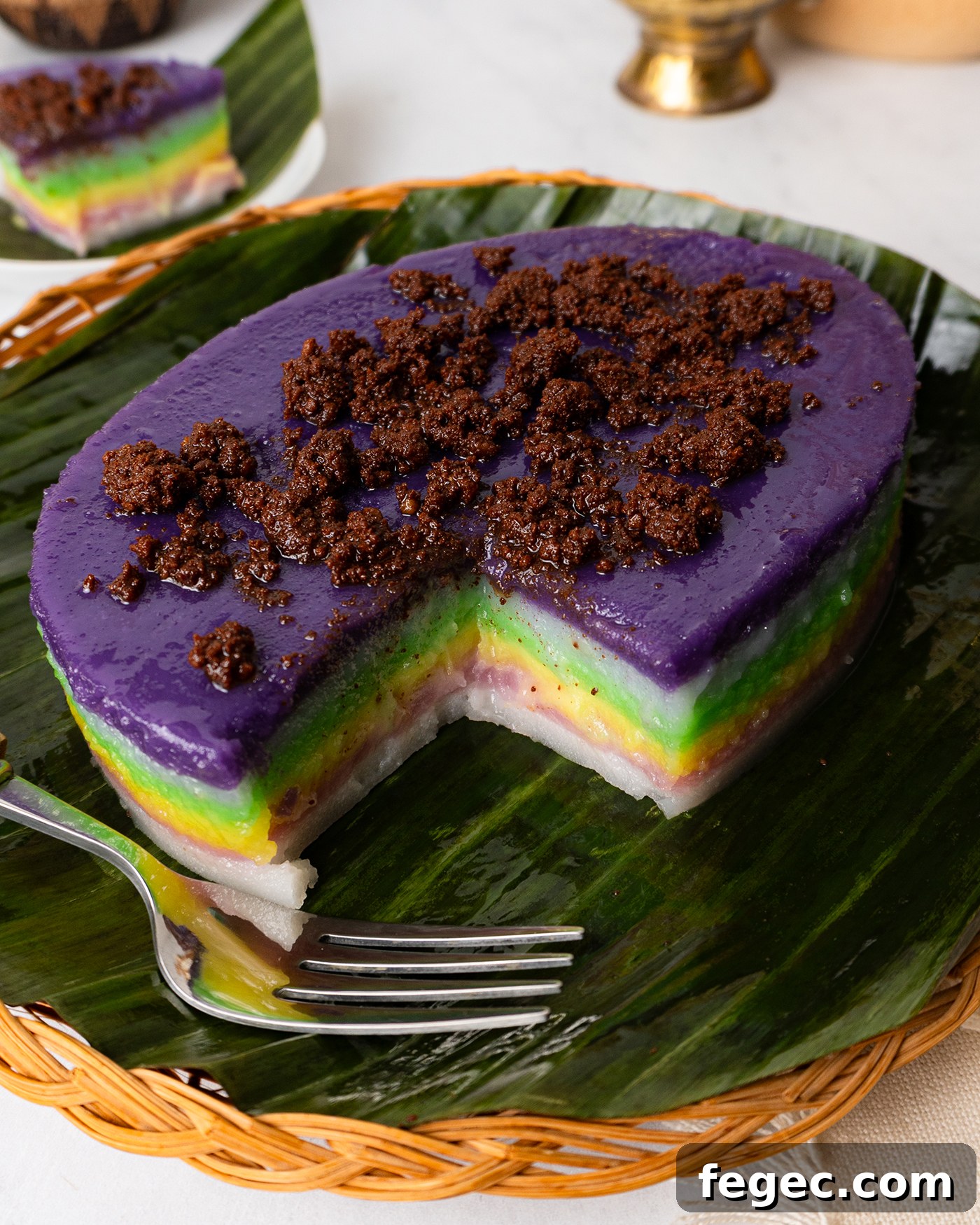
Rainbow Sapin-Sapin is a colorful, multilayered sticky rice kakanin—an easy Filipino dessert perfect for celebrating Pride Month. Soft, chewy, and topped with toasted coconut curds (latik), it’s served as a snack or dessert.
Table of Contents
- Introduction
- What is Rainbow Sapin-Sapin?
- Equipment Needed
- Ingredients
- Recipe
- Make Latik
- Prepare the Sapin-Sapin Batters
- Steaming the Sapin-Sapin
- Serving
- Tips for the Perfect Rainbow Sapin-Sapin
- Achieving Beautiful Colors
- Ensuring Even Cooking
- Preventing a Soggy Texture
- How to Store Rainbow Sapin-Sapin
- Final Thoughts
Introduction
June is LGBTQ+ Pride Month, a time to honor the activism and resilience of LGBTQ+ communities. This Rainbow Sapin-Sapin celebrates that spirit with a colorful, comforting Filipino kakanin.
Historically, some Filipino communities revered queer spiritual leaders known as babaylans for their wisdom and leadership. While colonial history shifted cultural perspectives, many Filipinos today are reconnecting with ancestral practices, preserving culture, and advocating for inclusion.
This Rainbow Sapin-Sapin is dedicated to LGBTQ+ friends, families, ancestors like the babaylans, and all readers.
What is Rainbow Sapin-Sapin?
Sapin-sapin is a layered sticky rice dessert made from glutinous rice flour and coconut milk. Traditional versions often have three layers—ube (purple yam), jackfruit, and plain coconut—topped with latik (toasted coconut curds).
This Rainbow Sapin-Sapin expands that idea into six pastel layers inspired by the rainbow. Each layer is soft and chewy, similar in texture to mochi, while latik adds a nutty, crunchy contrast.
Sapin-sapin is part of the kakanin family—Filipino rice-based sweets commonly enjoyed as snacks or desserts. It differs from kutsinta, which is typically a single-flavored steamed rice cake and often uses lye water rather than coconut milk.
Equipment Needed
- 1 medium-sized llanera (about 7″ x 5″ x 1.75″)
- Mixing bowls
- Silicone spatula
- Fine mesh strainer
- Steamer or pot with steamer rack
- Kitchen scale (recommended for even layers)
Ingredients
- 1 can coconut cream (for latik)
- 2 cups coconut milk + 2 tbsp
- 1¾ cups glutinous rice flour
- ¾ cup white sugar
Dyes and Extracts
- Ube extract (purple)
- Pandan extract (green)
- Jackfruit extract (yellow)
- Food coloring for blue and red layers (or natural dyes)
Recipe
Make Latik
- Cook coconut cream over medium heat until the liquids reduce and coconut solids separate and brown into latik. Strain and reserve both the latik and the coconut oil. (You can also use toasted shredded coconut as an alternative topping.)
Prepare the Sapin-Sapin Batters
- In a mixing bowl, whisk together glutinous rice flour, coconut milk, and sugar until smooth.
- Push the batter through a fine mesh strainer to remove lumps and create a silky batter.
- Divide the batter evenly into six small bowls—using a kitchen scale helps keep layers uniform.
- Add extracts or food coloring to each bowl to create your six colors/flavors (suggested order: purple, blue, green, yellow, red, white).
Steaming the Sapin-Sapin
- Grease the llanera with coconut oil. Prepare your steamer and bring the water to a steady simmer.
- Arrange the batters in your chosen sequence. Add the first layer (purple) and tilt the llanera so the batter spreads evenly across the pan. Steam for 5 minutes.
- Add the next layer, tilt to level, and steam another 5 minutes. Continue layering and steaming—about 5 minutes per layer—until the final white layer is set. Add 1–2 extra minutes at the end if needed to ensure the top is fully cooked.
- Remove from heat and let the sapin-sapin cool completely on the counter before unmolding.
Serving
- When ready to serve, lightly grease a small knife with coconut oil and run it around the edges of the llanera. Invert onto a plate to release the sapin-sapin.
- Brush the surface lightly with coconut oil for shine and moisture, then sprinkle generously with latik.
- Slice and enjoy—each bite combines chewy layers and toasty crunch.
Tips for the Perfect Rainbow Sapin-Sapin
Achieving Beautiful Colors
Use a mix of natural dyes and flavor extracts for soft pastel tones and authentic flavors. Ube, pandan, and jackfruit extracts provide distinct tastes; add them sparingly, a drop at a time, until you reach the desired intensity. Natural dyes may require extra drops to deepen the color.
Ensuring Even Cooking
Even layer thickness ensures uniform cooking. A kitchen scale is helpful for dividing batter evenly. Tilting the llanera after pouring each layer helps the batter reach all edges for consistent layers.
Preventing a Soggy Texture
Keep steam at medium-low to avoid excessive condensation. High heat creates droplets under the lid that can drip on the sapin-sapin and make it soggy. Place a clean kitchen cloth over the pot before closing the lid to absorb extra moisture and check condensation each time you lift the lid.
How to Store Rainbow Sapin-Sapin
Store refrigerated after cooling completely. Sapin-sapin is best within 3 days. It will firm up in the fridge—warm individual slices in the microwave for 15–45 seconds covered with a damp paper towel to soften before serving.
Final Thoughts
Celebrate Pride Month with this colorful Rainbow Sapin-Sapin. With layers of chewy sticky rice flavored by ube, jackfruit, pandan, and coconut, it’s a festive, comforting dessert that reveals a rainbow when sliced. Share a slice and enjoy the texture contrast of soft rice cake and crunchy latik.
Enjoyed this recipe? Try other Filipino desserts like Ginataan Bilo-Bilo or Tikoy for more kakanin inspiration.
Rainbow Sapin-Sapin
An easy Filipino steamed layered kakanin with ube, pandan, jackfruit, and coconut flavors—perfect for Pride Month.
Prep Time: 20 minutes · Cook Time: 30 minutes · Total Time: 50 minutes · Servings: 1 llanera
Ingredients
- 1 can coconut cream (for latik)
- 2 cups coconut milk + 2 tbsp
- 1¾ cups glutinous rice flour
- ¾ cup white sugar
Dyes & Extracts
- Ube extract (purple)
- Pandan extract (green)
- Jackfruit extract (yellow)
- Food coloring for blue and red
Instructions
Make Latik
- Cook coconut cream until it reduces and the solids brown into latik. Strain and reserve latik and coconut oil.
Prepare the Batters
- Mix glutinous rice flour, coconut milk, and sugar until smooth. Strain to remove lumps.
- Divide batter evenly into six bowls. Add extracts or coloring to each bowl.
Steaming
- Grease the llanera with coconut oil. Heat the steamer water to a steady simmer.
- Layer batters in order (purple, blue, green, yellow, red, white). Steam each layer about 5 minutes, adding 1–2 minutes at the end if needed.
- Cool completely before unmolding.
Serve
- Run a greased knife around the llanera, invert onto a plate, brush with coconut oil, and garnish with latik.
Notes
You can find detailed latik instructions in many Filipino recipes or top with toasted coconut as an alternative.
More Recipes You’ll Love
- Ginataan Bilo-Bilo (Filipino Sticky Rice Balls in Coconut Milk) — a warm coconut stew with chewy rice balls.
- Drinkable Mochi — a chewy topping for drinks and bubble tea.
- Tikoy (Nian Gao) — a sticky rice cake often enjoyed during celebrations.
References & Further Reading
Historical context and background reading on babaylans and Filipino kakanin traditions are available from cultural and food history sources.