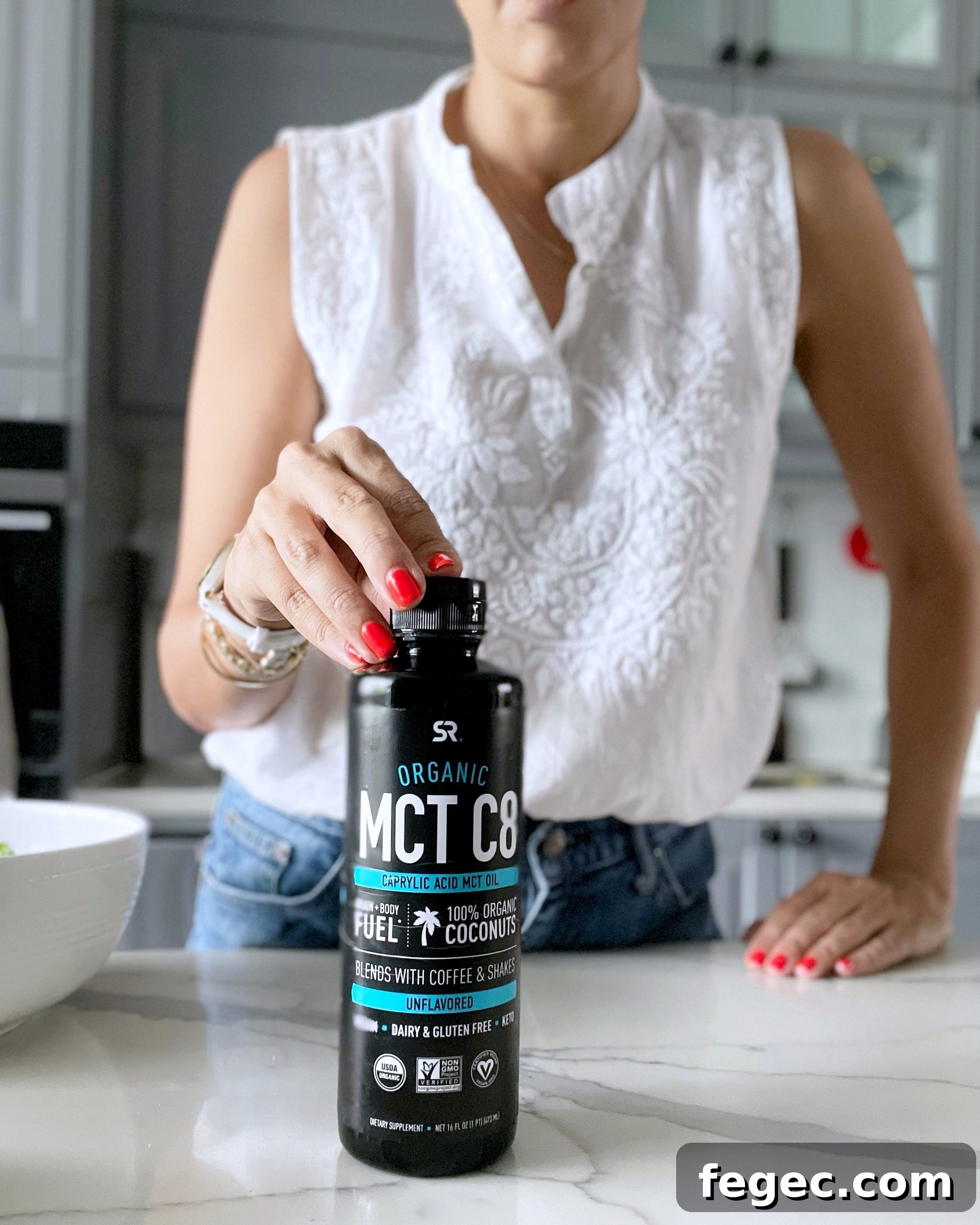
Have you bought MCT or thought about trying it? Are you a little confused about what exactly it is and how to use it? If so, read on!
Many people mention taking MCT oil, including myself, yet few clearly explain what it is, how it works, the potential benefits, what to check when buying it, and practical ways to use it. Below is a straightforward guide to help you understand MCT oil and how to incorporate it into your routine.
What is MCT oil?
MCT stands for medium-chain triglycerides. These are a type of fatty acid most commonly derived from coconut oil. Chemically, MCTs have chains of about 6–12 carbon atoms, while the long-chain triglycerides (LCTs) found in most other dietary fats typically have 13–21 carbon atoms. This difference in chain length changes how the body processes them.
How does it work?
MCTs are absorbed and metabolized more quickly than long-chain fats. They travel directly from the gut to the liver, where they are rapidly used for energy or converted into ketones rather than being stored as body fat. Because of this rapid conversion, many people use MCT oil as a quick energy source or to support ketogenic diets.
Potential benefits
- May improve cholesterol profile when used as part of a balanced diet.
- Can slightly increase metabolic rate and calorie burning.
- Helps reduce appetite by stimulating hormones such as peptide YY and leptin, which contribute to feelings of fullness.
- May support healthy blood sugar control in some people when combined with an appropriate diet.
- Provides a fast, readily available energy source.
- Some users report improved mental focus and clarity after consuming MCTs.
- Has mild antimicrobial properties that may support gut health, particularly because of components like lauric acid when present in coconut-derived products.
What to look for when buying MCT oil
MCT oils typically contain different chain lengths—most commonly C8 (caprylic acid) and C10 (capric acid). Products may be 100% C8, 100% C10, or a blend of both. If you want the fastest-converting form to ketones and energy, many experts recommend 100% C8 (caprylic acid). Also look for a reputable brand, clear labeling of fatty acid composition, and minimal additives.
How to use MCT oil
MCT oil is versatile and can be added to smoothies, coffee, salad dressings, or homemade energy balls (bliss balls). A common starting dose is 1 teaspoon to 1 tablespoon, progressing up to 1–2 tablespoons per day based on tolerance. Because MCT oil can cause digestive upset for some people—especially when taken on an empty stomach—start with a small amount and increase gradually to find what works best for you.
Some practical tips:
- Blend MCT oil into hot or cold beverages for a smooth texture; it does not emulsify well on its own in watery drinks.
- Combine with fats like butter or coconut milk in coffee for a creamier mouthfeel.
- Avoid heating MCT oil to very high temperatures; it’s best used at low heat or added after cooking.
- If you experience diarrhea, cramping, or nausea, reduce the amount and increase more slowly.
Summary: MCT oil is a concentrated source of medium-chain fatty acids that the body metabolizes quickly for energy or ketones. It can support appetite control, energy, and focus for many people, but individual responses vary. Choose a product with clear labeling—preferably C8 if your goal is rapid ketone production—and introduce it gradually to avoid digestive discomfort.